Dresden on the Elbe: visit the Frauenkirche and Zwinger with the right expectations
The Elbe gives Dresden a broad urban setting, but the two best-known buildings in the centre call for different kinds of visit. The Frauenkirche is an active church with free visiting periods and a paid dome climb. The.
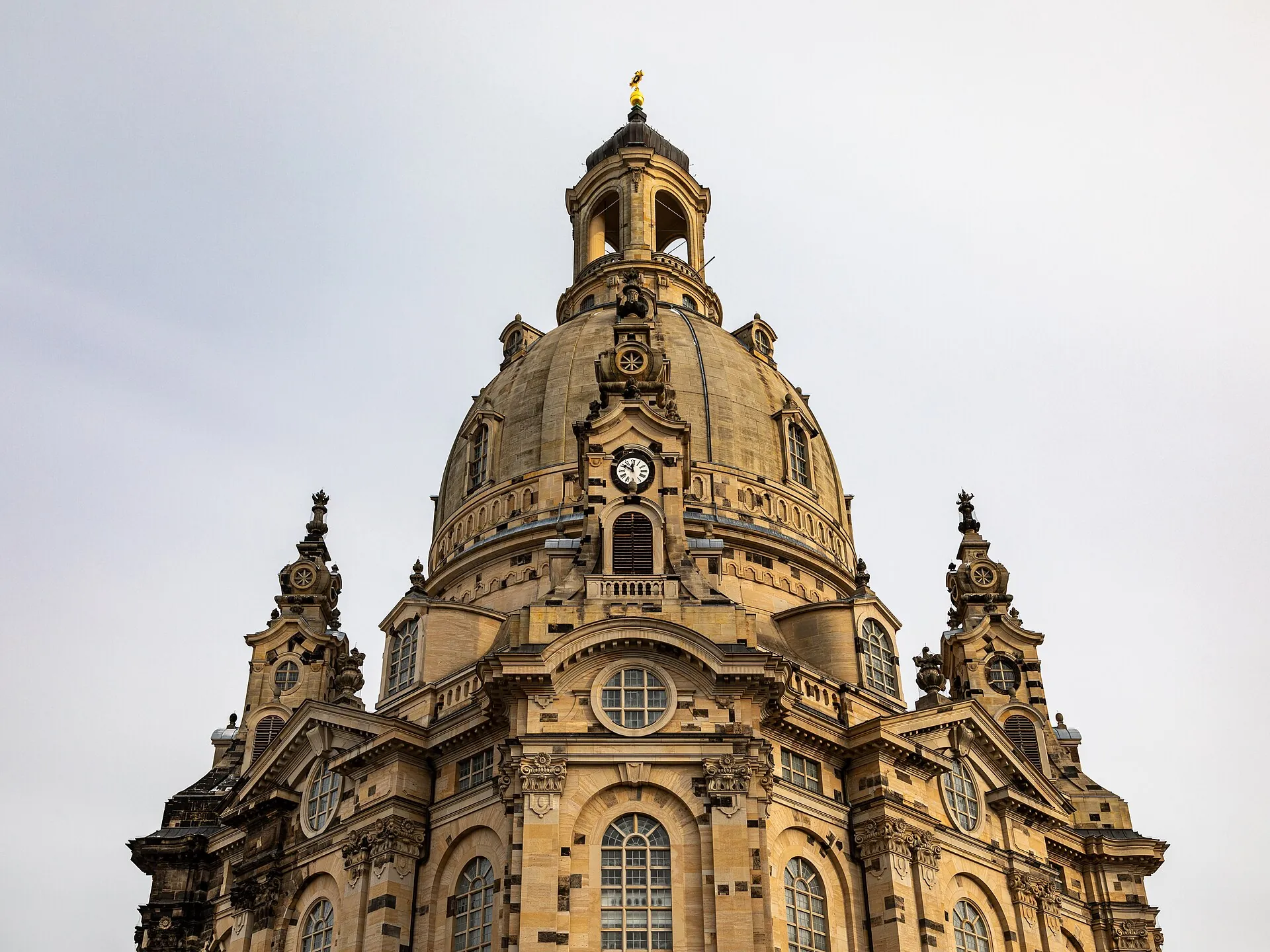
The Elbe gives Dresden a broad urban setting, but the two best-known buildings in the centre call for different kinds of visit. The Frauenkirche is an active church with free visiting periods and a paid dome climb. The Zwinger is a Baroque complex whose outdoor areas are free to enter, while its museums have their own tickets and closures. For Tuesday 20 October, one warning is especially useful: the Porzellansammlung is listed as closed until an expected reopening on 30 October. [1][2][5][6]
The Frauenkirche tells a story of destruction and rebuilding in stone. Construction began in the eighteenth century to a design by George Bähr. After the bombing of February 1945, the burnt-out church collapsed. Reconstruction started in 1994 and the church was reconsecrated in 2005. The church foundation describes a rebuilding effort made possible by donations and supported from both inside and outside Germany. The building is therefore more than a photo stop on the Neumarkt. [3][4]
Inside the church or up the dome
For ordinary church visits, its own site lists weekday hours of 10–11.30 a.m. and 1–5.30 p.m., expressly warning that changes are possible. Entry during these periods is free. Large bags and suitcases are not allowed inside. The dome climb uses a separate entrance and requires its own ticket. According to the church, the viewpoint is 67 metres above the city, but reaching it involves stairs and a steep ascent. The dome is not step-free accessible. [1][2]
Regular dome hours in October are Monday to Saturday, 10 a.m. to 6 p.m., according to the church. The climb closes earlier in the winter months from November. That seasonal change does not affect 20 October, but it shows why an old guidebook cannot provide a dependable day plan.[1][2]
The Zwinger outdoors
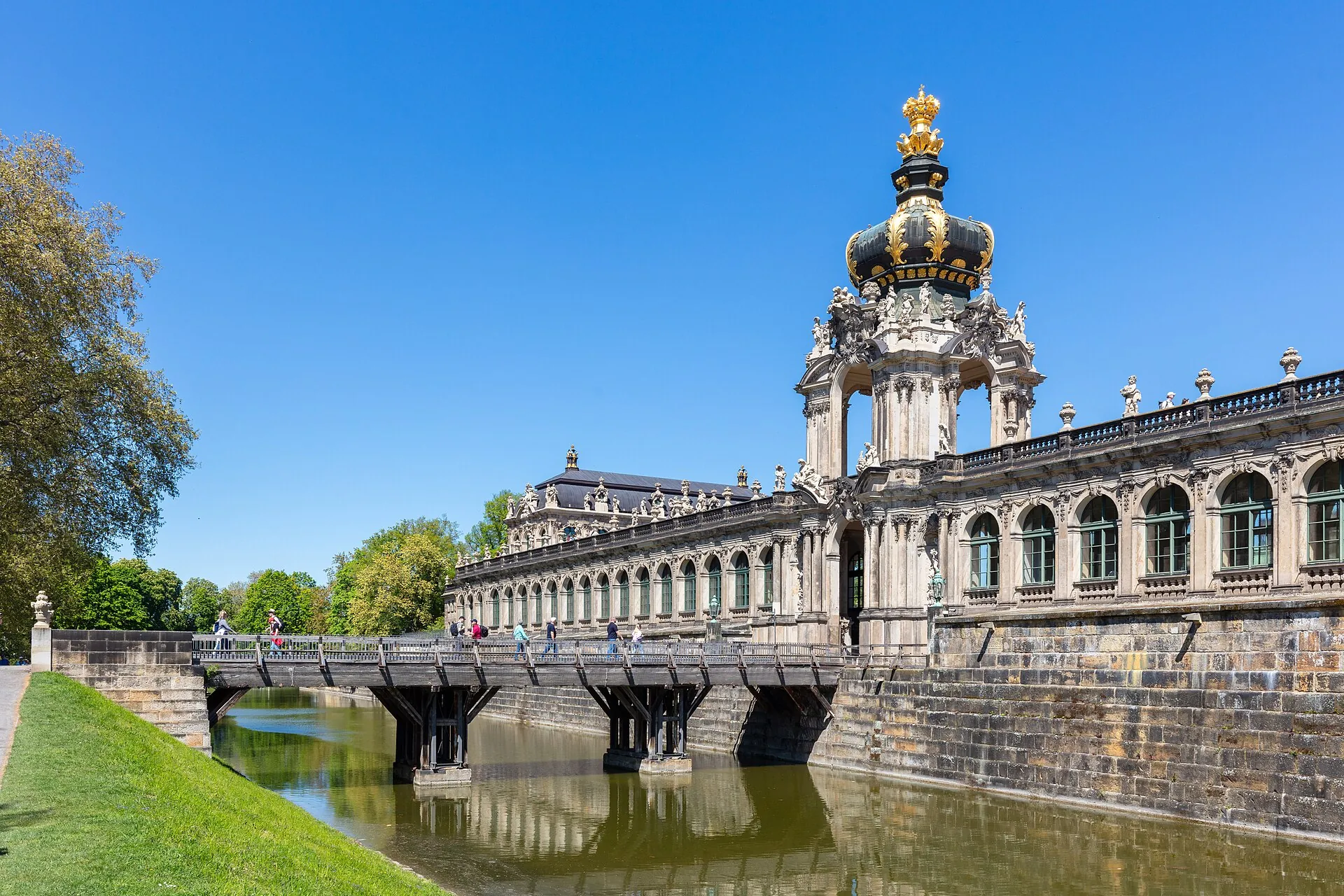
The Zwinger began as a Baroque project of Augustus the Strong. According to its heritage site, he commissioned an orangery in 1709; the ceremonial opening followed in 1719. The complex was restored after the destruction of 1945. Today the courtyard, galleries and museums have different access arrangements. Outdoor access is free; museum entry requires tickets. For the season from 1 April to 31 October, the heritage site lists outdoor hours of 6 a.m. to 10 p.m., subject to any current changes. [5]
Staatliche Kunstsammlungen Dresden lists Tuesday hours of 10 a.m. to 5 p.m. for the Gemäldegalerie Alte Meister and 11 a.m. to 5 p.m. for the Mathematisch-Physikalischer Salon. These museums close on Mondays, so Tuesday is a regular visiting day. The Porzellansammlung, however, lists a temporary closure until approximately 30 October 2026. A regular Zwinger house ticket also excludes the temporary Correggio exhibition.[6][7]
The river as a frame
The Elbe is a useful point of orientation for a walk from the centre, but this research does not support promising a boat trip on 20 October: a current autumn sailing schedule has not been checked. Another popular description also needs correction. The Dresden Elbe Valley was once a UNESCO World Heritage Site, but it was removed from the list in 2009. The city and river remain historically interesting; the current World Heritage designation no longer applies. [8][9]
Practical point for Tuesday 20 October:Do not build the Porzellansammlung into a fixed day plan. An Elbe boat trip needs a current sailing schedule. [1][2][5][6][9]
Sources and image credits
- 1. Stiftung Frauenkirche Dresden, visitor information — church hours, free entry, baggage and accessibility.
- 2. Frauenkirche Dresden, dome climb — accessed 18 October 2026: seasonal hours, viewpoint, ascent and tickets.
- 3. Frauenkirche Dresden, history — accessed 18 October 2026: construction, collapse and reconsecration.
- 4. Frauenkirche Dresden, reconstruction — accessed 18 October 2026: funding and meaning of the rebuild.
- 5. Der Dresdner Zwinger, history — and [visitor service](https://www.der-dresdner-zwinger.de/de/dresdner-zwinger/gaesteservice/), accessed 18 October 2026: origins, restoration, outdoor access and hours.
- 6. Staatliche Kunstsammlungen Dresden, Zwinger mit Semperbau — museum hours, Porzellansammlung closure and ticket scope.
- 7. SKD Gemäldegalerie Alte Meister, Correggio — accessed 18 October 2026: temporary exhibition.
- 8. UNESCO World Heritage Centre, Dresden Elbe Valley — removal from the World Heritage List in 2009.
- 9. Sächsische Dampfschiffahrt — accessed 18 October 2026: Elbe context; autumn sailing schedule not listed in this source.
Image credits 1
Photo: Dietmar Rabich / Wikimedia Commons · CC BY-SA 4.0 · Image source

Image credits 2
Photo: Diego Delso / Wikimedia Commons · CC BY-SA 4.0 · Image source

Euro Magazine · 20 October 2026