Four Hanseatic cities, four ways to see trade
A monumental city gate in Lübeck, a town hall square in Bremen, a port on the Polish coast and medieval streets in Tallinn: the Hanse does not have just one face. What began as a network of travelling merchants grew.
A monumental city gate in Lübeck, a town hall square in Bremen, a port on the Polish coast and medieval streets in Tallinn: the Hanse does not have just one face. What began as a network of travelling merchants grew into a league of cities that shaped northern European trade and politics for centuries. According to the present-day cities’ association DIE HANSE, more than 200 cities were involved at the network’s height. These four places show different traces of that past. [1]
This is not a proposal for a rushed short itinerary. Lübeck and Bremen are in Germany, Gdańsk is in Poland and Tallinn is in Estonia. One city can form a city break; a longer trip connecting them requires suitable trains, ferries and generous transfer times. Their historical link makes a coherent travel theme; it does not shorten the distances between them.
Lübeck: a city gate as calling card
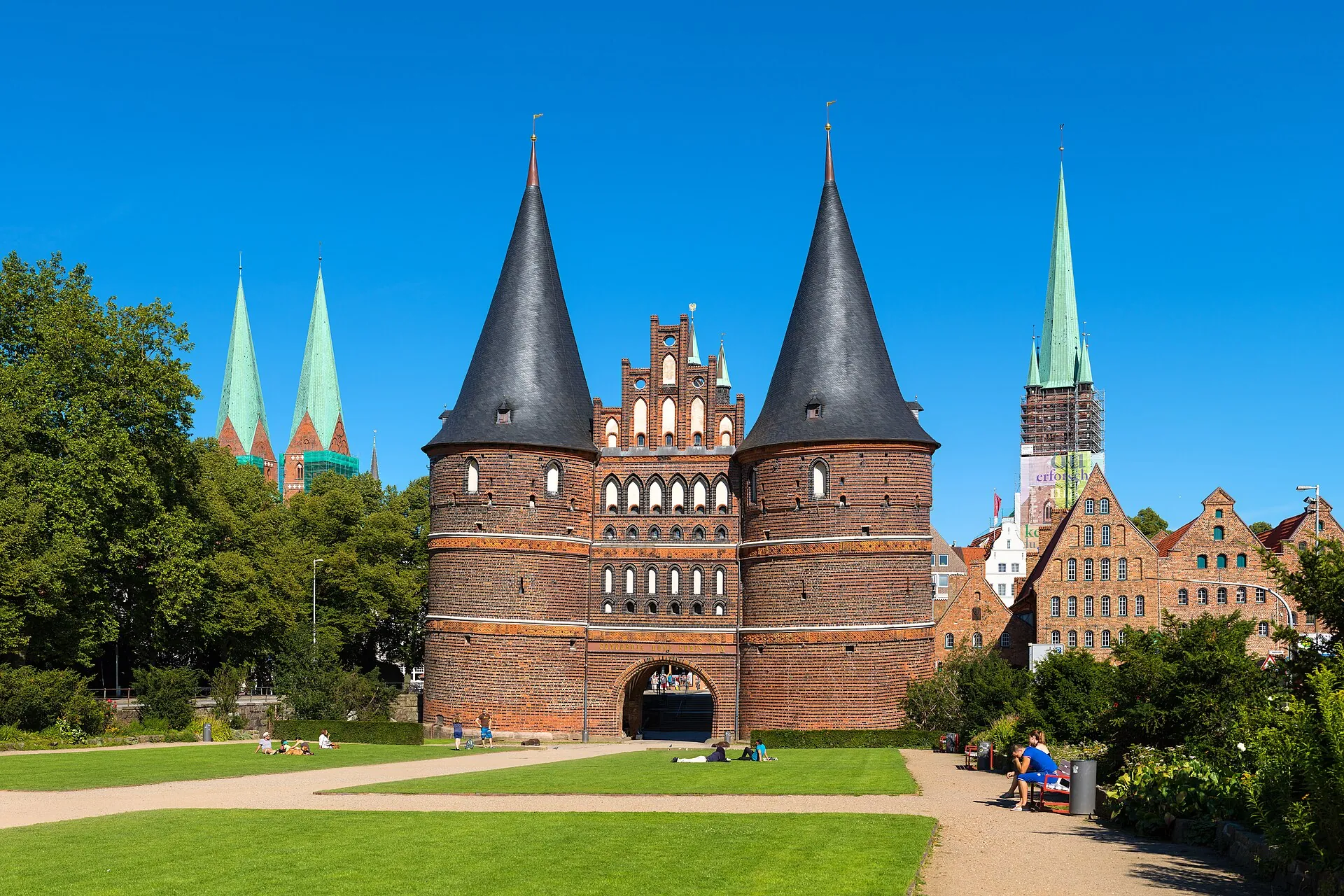
Lübeck was a major trading centre in northern Europe. UNESCO describes it as a former capital of the Hanseatic League and inscribed its historic centre on the World Heritage List in 1987. The brick Holstentor, once part of the city’s defences, makes visible how a trading city sought to display its wealth and protect it. [2][3]
Do more than take a photograph at the gate. Give yourself time for the streets and waterways around the old town. For deeper context, consider the European Hansemuseum. The museum can connect the buildings outside with stories of merchants, routes and encounters. [4]
Bremen: civic autonomy on the market square
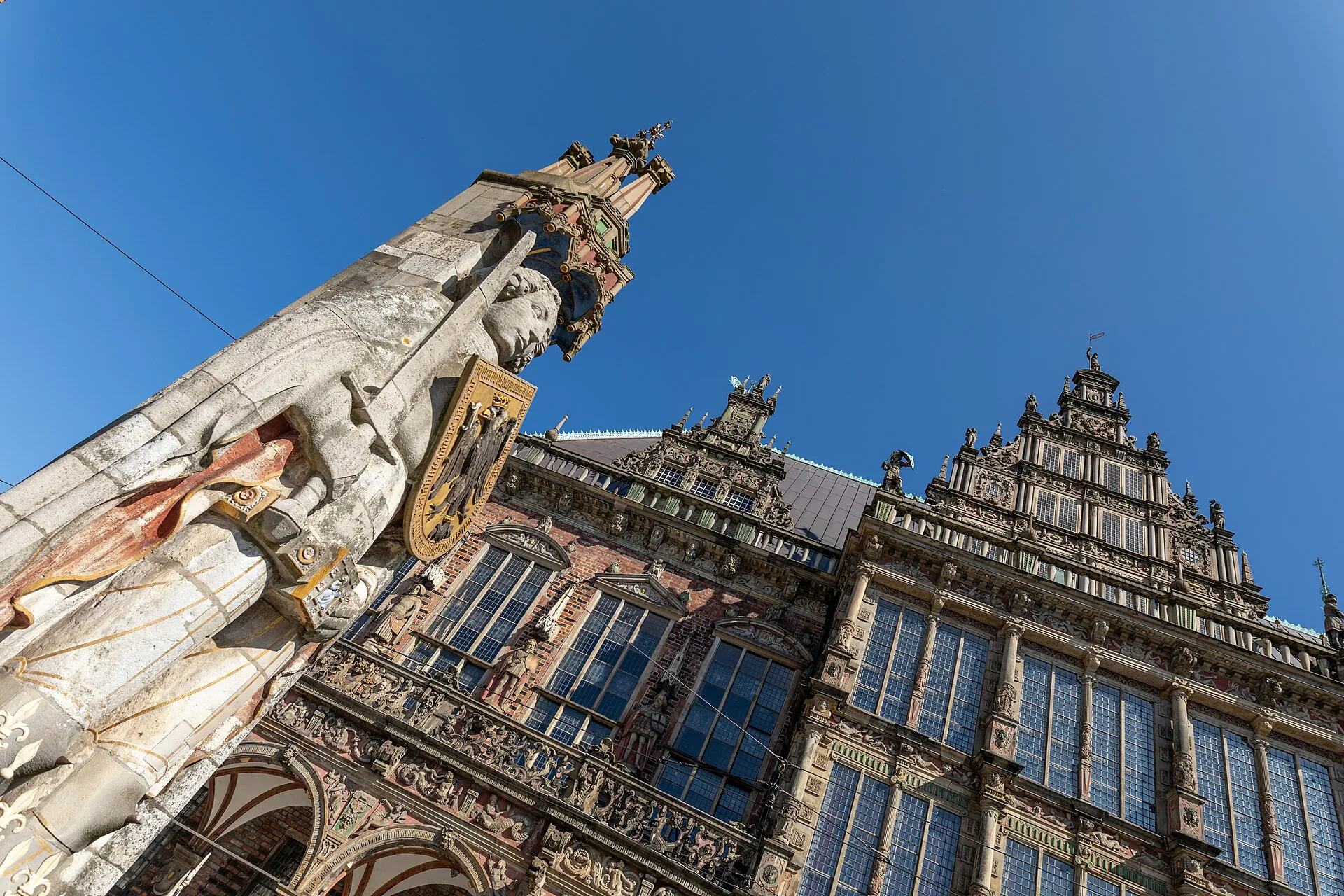
In Bremen, the old town hall stands beside the statue of Roland. UNESCO inscribed this town hall and this statue as World Heritage for their significance as expressions of civic autonomy and sovereignty. The designation does not cover the Hanse as a whole. UNESCO says the Gothic town hall was built after Bremen joined the league; the Roland statue dates from 1404. [5]
Start on the market square and see how the buildings tell a story of citizens asserting a place in the political landscape. A visit to Bremen need not prove that every stone is ‘Hanseatic’. The city shows particularly well how commerce, municipal government and civic rights could intersect.
Gdańsk: a Polish port in a northern network
Gdańsk ties the Hanseatic story to the Polish coast. The city’s official tourism site records that representatives of Gdańsk first attended a meeting of Hanseatic cities in Greifswald on 7 September 1361. The date provides a concrete historical link, although today’s lively port scene also reflects many later centuries. [6]
Walk along the Motława and look at the relationship between city and water. Then make time for a museum or neighbourhood beyond the best-known quays. Gdańsk becomes more than the backdrop to a historical label.
Tallinn: the street plan of a trading city
Tallinn, also known historically as Reval, retains parts of its medieval street pattern. Visit Tallinn dates many Old Town buildings and streets to the 13th through 16th centuries, when the city developed as a Hanseatic centre. UNESCO added the historic centre to the World Heritage List in 1997 and identifies it as a major centre of the league. [7][8]
Walking is central to a visit here. Take time for the streets, squares and facades, then choose a museum if you want to explore a subject further. The Hanse emerges as a network that shaped each city differently, rather than one identical story in every port.
A connection still cared for today
The medieval Hanse eventually lost its economic importance. The present-day cities’ association DIE HANSE was founded in Zwolle in 1980 to bring the shared heritage back into view. It is a modern heritage network, not a continuation of the medieval trading power. [1]
Travelling between these cities means moving between past and present. Lübeck offers the gate, Bremen the market square, Gdańsk the harbour and Tallinn the street pattern. Together they show how trade moved more than goods: it also shaped cities.
Sources and image credits
- 1. DIE HANSE, Was ist die Hanse? — origins, reach and present-day association.
- 2. UNESCO, Hanseatic City of Lübeck — historical role and World Heritage inscription.
- 3. Lübeck und Travemünde Marketing, Holstentor — the gate’s function.
- 4. European Hansemuseum Lübeck, Visit — location and visitor information.
- 5. UNESCO, Town Hall and Roland on the Marketplace of Bremen — precise heritage objects, dates and meaning.
- 6. Visit Gdańsk, Hanza — the city’s attendance at the 1361 Hanseatic meeting.
- 7. Visit Tallinn, Old Town — development and dates.
- 8. UNESCO, Historic Centre (Old Town) of Tallinn — Hanseatic history and World Heritage inscription.
Image credits 1
Photo: Christian Wolf (www.c-w-design.de) / Wikimedia Commons · CC BY-SA 3.0 de · Image source

Image credits 2
Photo: Dietmar Rabich / Wikimedia Commons · CC BY-SA 4.0 · Image source

Euro Magazine · 20 October 2026