A European history without one national master narrative
Brussels’ House of European History brings together objects and memories from across the continent. On Mondays the museum opens at 13:00.
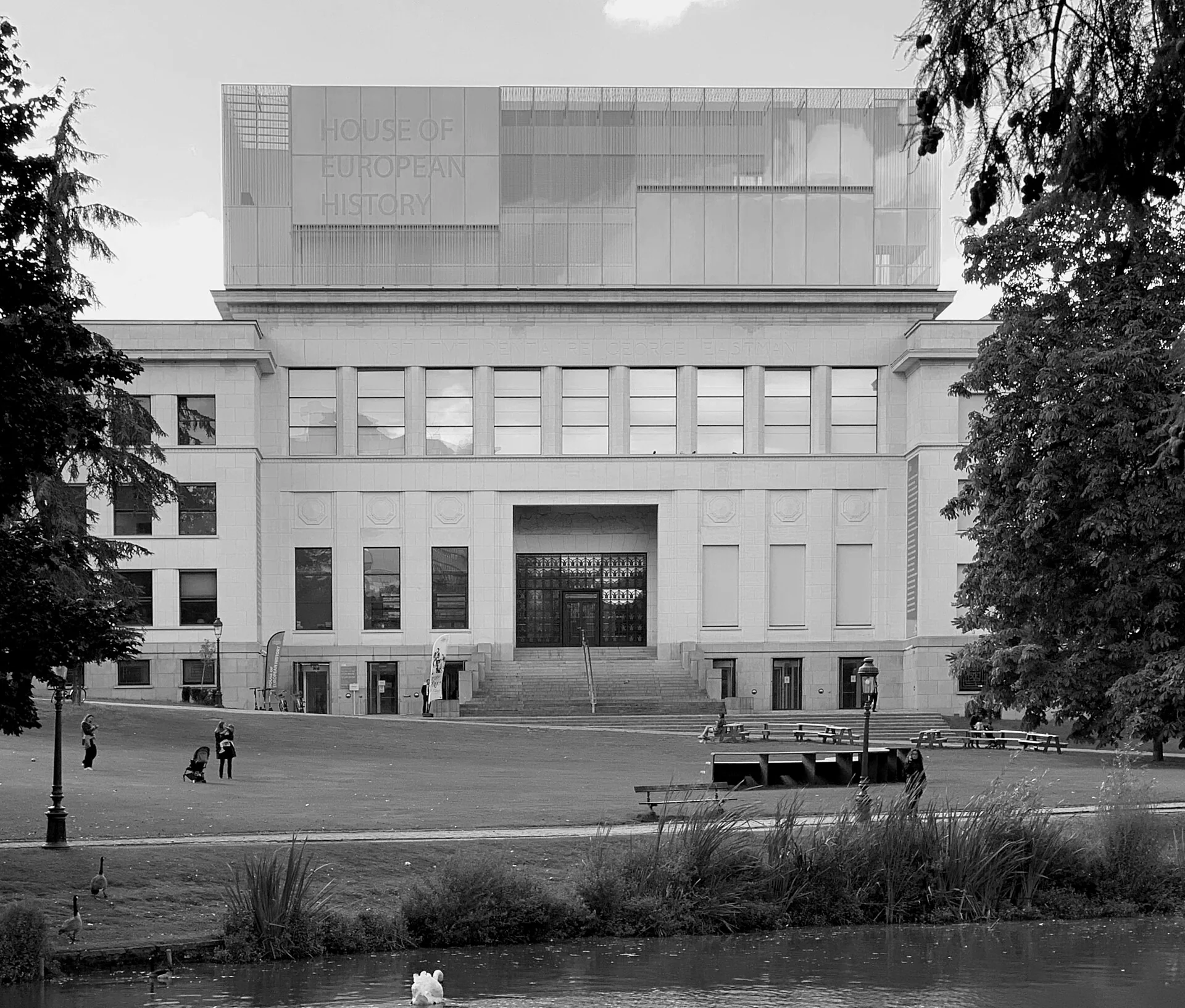
At the House of European History in Brussels, the route does not begin with a separate history of every country. The European Parliament’s museum looks instead at events and memories that connect countries, and sometimes divide them. Its permanent exhibition contains more than 1,500 objects, documents and audiovisual items from over 300 museums and collections, according to the museum. That makes it a useful place to consider how the same century can be seen through different European experiences. Admission is free. On Monday 19 October, however, the museum does not open until 13:00, so a morning visit will not fit your itinerary.
The collection reaches from the myth of Europa to the twenty-first century. Alongside art and official documents are propaganda materials, everyday objects and souvenirs. Ordinary things can make large political changes tangible: an idea appears in the form of something a person once carried, used or kept. The museum describes its collection as a way to explore questions about European memory. Its online collection is still being developed. The 345 items shown on the collection page when consulted are therefore not a count of everything owned by the museum, nor of all the objects displayed in the permanent exhibition.
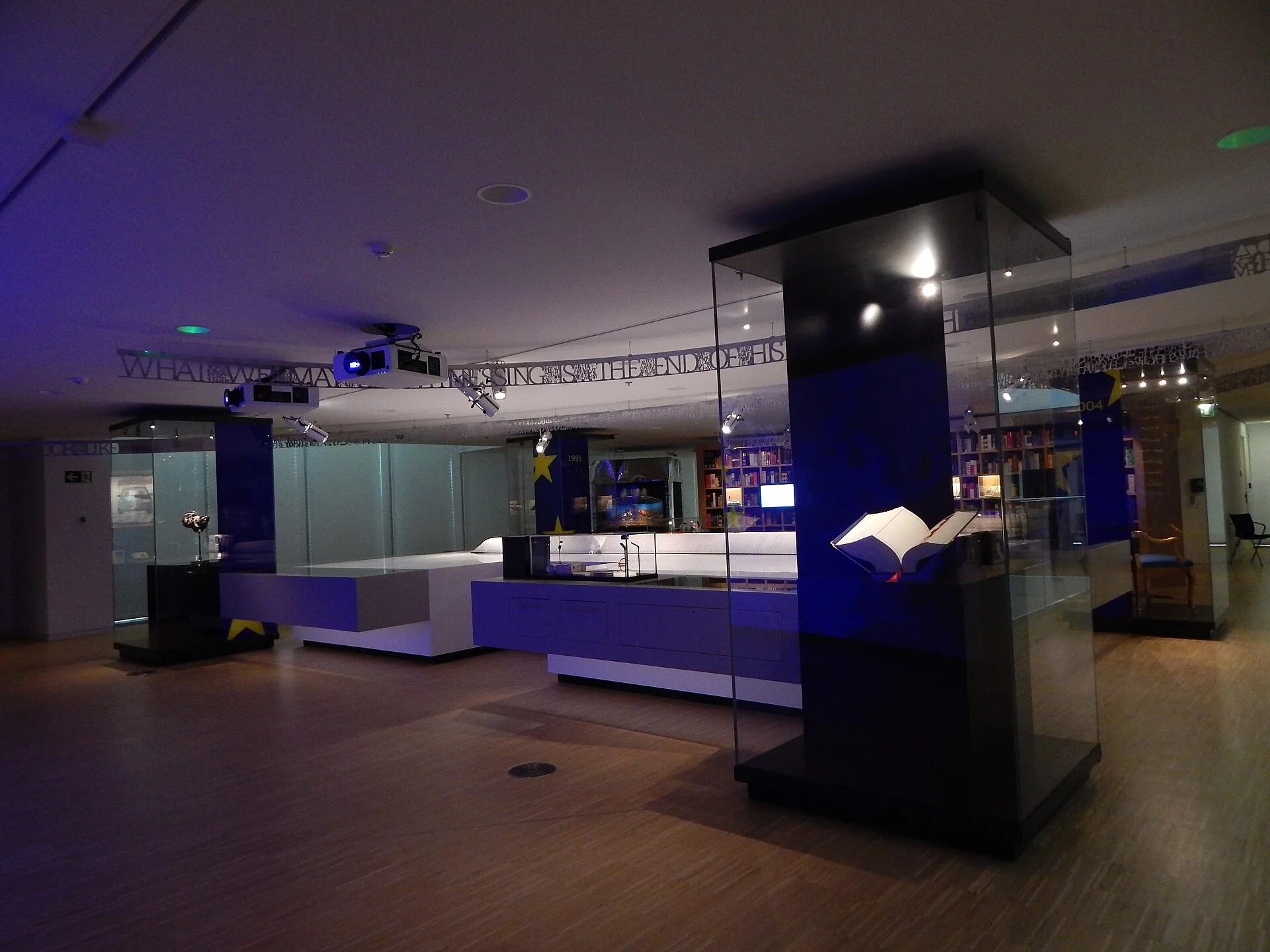
The permanent route includes the devastation of the Second World War, the division of Europe by the Iron Curtain and the beginnings of European integration. The curators ask how these experiences continue to shape the present. Objects from different countries are placed alongside one another so that visitors can see both shared questions and contrasting memories. The exhibition even asks how future history books might describe our own era. It is an open approach rather than a story that moves towards one inevitable conclusion. Take time to compare the viewpoints instead of trying to absorb every label in a single pass.
The museum is also showing a temporary exhibition called “Postcolonial?”. Its published programme dates run from 17 April 2026 through 14 March 2027. It examines how colonisation and its aftermath have continued to affect Europe over the last seventy years. Explanatory texts are available in English, French, Dutch and German. The museum also describes collecting projects about the introduction of the euro and the 2019 European Parliament elections. Those projects show how the collection grows. They do not mean that every object mentioned online is necessarily on display in a gallery when you visit.
The building has a history of its own. George Eastman’s 1931 donation funded the Eastman building as a dental clinic for disadvantaged children. Today it houses the museum in Leopold Park, near the European institutions. Visitors can use a free tablet guide in 24 languages, including for themed routes. The museum suggests about ninety minutes for the permanent exhibition. Individual visitors and groups of fewer than ten do not need to book in advance; larger groups must register their visit. If you are travelling with several friends, check your group size before assuming the same admission arrangements apply.
For Monday 19 October, head to Rue Belliard 135, 1000 Brussels, after 13:00. Monday hours are 13:00 to 18:00, with last admission at 17:30. The usual hours are 09:00 to 18:00 from Tuesday to Friday and 10:00 to 18:00 at weekends. Brussels-Luxembourg railway station is about 700 metres away, according to the museum. Visitors and bags may be screened on arrival, and staff may ask for identification. The museum website carries changes beyond its published regular hours. Those updates allow a more precise visit plan.
Sources and image credits
- 1: Source 1 · historia.europa.eu · Source 5 · historia.europa.eu
- Source 2 · historia.europa.eu
- Source 3 · historia.europa.eu
- 4: Source 4 · historia.europa.eu · Source 6 · historia.europa.eu
- 5: Source 5 · historia.europa.eu · Source 1 · historia.europa.eu
- Source 6 · historia.europa.eu
Image credits 1
Photo: Benoît Prieur / Wikimedia Commons · CC0 · Image source

Image credits 2
Photo: Masterdeis / Wikimedia Commons · CC BY-SA 4.0 · Image source

Euro Magazine · 19 October 2026
Wikimedia Commons: The House of European History in Brussels’ Eastman building.
Wikimedia Commons: A gallery inside the House of European History in Brussels.