Istria and Dubrovnik outside the summer: look beyond the postcard
Poreč preserves an early Christian complex; Dubrovnik shows along the city walls how a coastal city changed over centuries.

Istria and Dubrovnik are not two stops in the same city, but they share a question: what remains visible when a coastal town is more than a summer destination? In Poreč it concerns the early Christian Euphrasian Basilica and the surrounding complex. In Dubrovnik, visitors follow the ramparts of a historic city on the Adriatic Sea. UNESCO describes both as World Heritage Sites, for different reasons. A route that focuses on architecture can therefore also have significance outside the classic beach season. This article makes no statement about weather, crowds or lower prices in October.
According to UNESCO, the Basilica of Poreč is part of an exceptionally fully preserved religious complex. Early Christianity was established here as early as the fourth century; the current group of monuments shows several periods. The basilica combines classical and Byzantine elements. As a result, it is not enough to just recognize the facade in a photo: the meaning lies precisely in the connection between the basilica, buildings and historical layers. For access, restoration work and current opening hours, use current local visitor information. That information was not reliably available in the material examined.
The official tourism site of Istria presents autumn with themes such as wine, olive oil and truffles. That says something about how the region presents itself to visitors; it does not prove a harvest or event on a chosen day of travel. Anyone who wants a tasting or tour needs information from the company in question to see what can actually be booked. The site also mentions a sporting event in Poreč, but without confirmation from the organizer, it cannot establish a date or possible road closures. Poreč's heritage remains an independent destination even without an event.
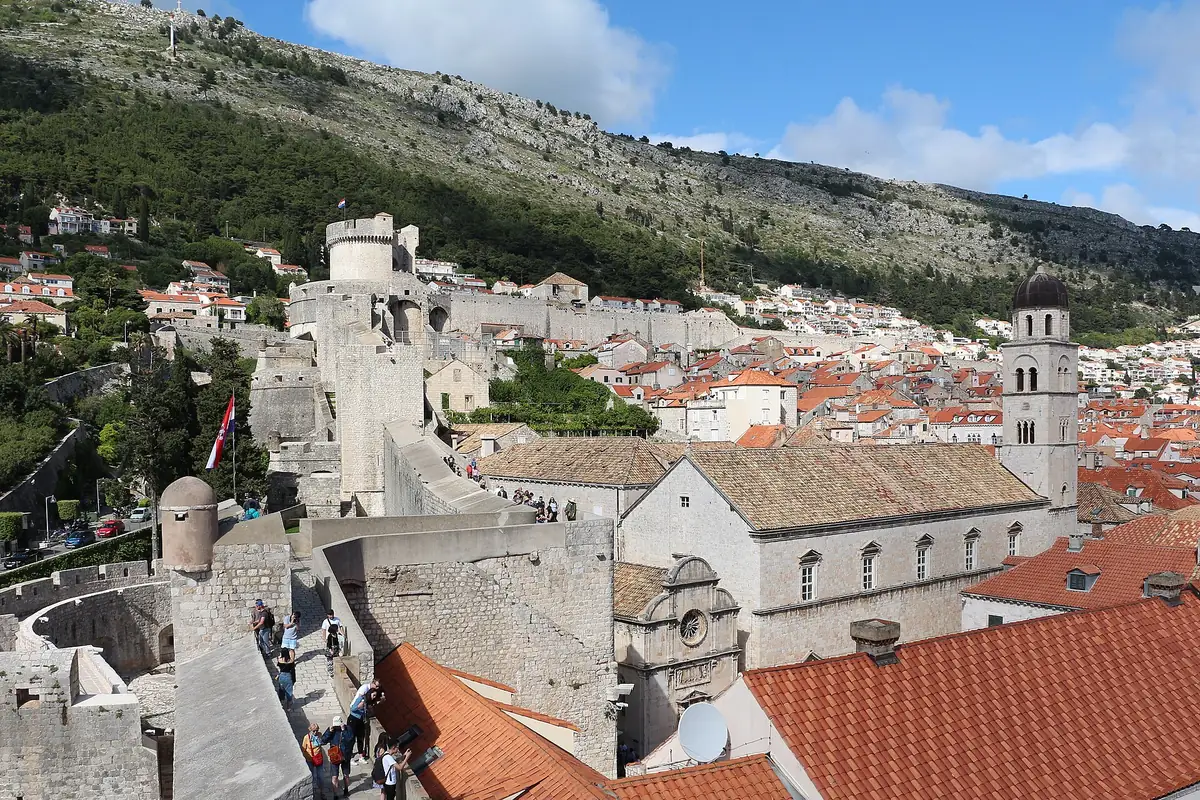
Dubrovnik has a different history. According to UNESCO, the city grew into an important maritime power from the thirteenth century. An earthquake in 1667 caused heavy damage, but churches, monasteries, palaces and fountains from Gothic, Renaissance and Baroque remained part of the cityscape. The ramparts offer a different view of that history than a walk at street level. The manager of the walls mentions a route of approximately 1,940 meters with towers and fortresses. That is an indication of the structure, not a guaranteed walking distance or visit duration for every guest.
According to the operator, the walls require a ticket valid for one circuit without re-entry. Anyone leaving the route cannot assume that the same ticket will allow a return. The pages reviewed did not establish a reliable current October price or opening time, so the operator’s website is the place for current details before travelling. Fort Lovrijenac stands on a rocky outcrop outside the walls and forms part of the wider defence system; the sources do not establish current access or a combined ticket.
Practically, the traveler can ask two types of questions. In Poreč: which parts of the basilica complex are accessible on the chosen day, and can a tasting be booked directly? In Dubrovnik: when do the walls open, how much does one visit cost and how does the entrance card work? UNESCO gives the historical reason for looking; operators provide the current conditions. This way, a trip to both places remains concrete without the usual assumptions that it is automatically empty, cheap or easily accessible outside the summer. Between Istria and Dubrovnik a trip is also required that you must plan separately.
Sources and image credits
- 1: UNESCO World Heritage Centre — Dubrovnik · UNESCO World Heritage Centre — Euphrasian Basilica, Poreč
- Dubrovnik City Walls — official operator
- UNESCO World Heritage Centre — Euphrasian Basilica, Poreč
- Istria Tourism Board — official destination site
Image credits 1
Photo: Viktar Palstsiuk / Wikimedia Commons · CC BY-SA 4.0 · Image source

Image credits 2
Photo: Bernard Gagnon / Wikimedia Commons · CC BY-SA 4.0 · Image source

Euro Magazine · 16 October 2026
Wikimedia Commons: The Euphrasian Basilica in Poreč.
Wikimedia Commons: The city walls of Dubrovnik.
3: UNESCO World Heritage Centre — Dubrovnik · Dubrovnik City Walls — official operator
5: UNESCO World Heritage Centre — Dubrovnik · Dubrovnik City Walls — official operator
6: UNESCO World Heritage Centre — Dubrovnik · Dubrovnik City Walls — official operator · UNESCO World Heritage Centre — Euphrasian Basilica, Poreč · Istria Tourism Board — official destination site