Lyon between the Rhône and Saône: Roman stones and a city built around food
The Rhône is one of Lyon’s defining axes, but a description based on that river alone misses the Saône. Between and alongside the two waterways are neighbourhoods where Roman history, old streets and food culture meet..
The Rhône is one of Lyon’s defining axes, but a description based on that river alone misses the Saône. Between and alongside the two waterways are neighbourhoods where Roman history, old streets and food culture meet. An October visit can therefore begin near the confluence and end on Fourvière hill or at a market. This is a story about the city, not a checked Rhône cruise or cycle route. [1][3]
The location between two rivers offers more than a view. UNESCO describes Lyon at the confluence of the Rhône and Saône, with Fourvière to the west and Croix-Rousse to the north. Its historic site joined the World Heritage List in 1998. That heritage has many layers: Roman remains, medieval and Renaissance districts, and architecture from later periods. You need not choose one monument to understand the story; the city itself provides a route through it. [3]
Roman Lyon on Fourvière
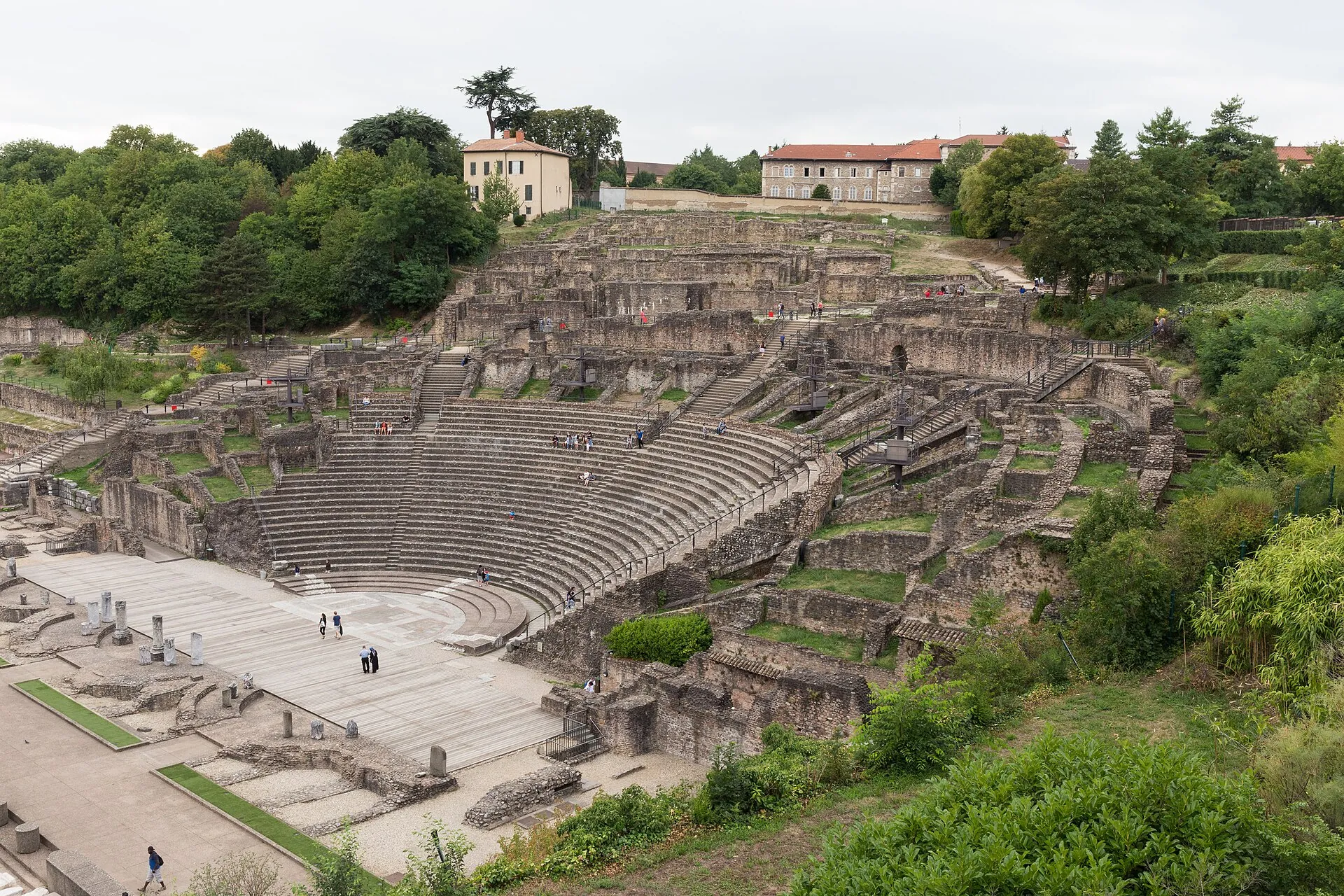
Lugdunum was founded in 43 BC. The site was strategic: the Rhône valley linked the Mediterranean to territories farther north. On Fourvière hill, the Roman theatres stand beside the Lugdunum archaeological museum. According to the museum’s own site, the larger theatre is the oldest in Roman Gaul; the smaller odeon lies nearby. The monuments still host cultural activities, although that does not mean a performance is scheduled on the day you visit. [4][5]
For Tuesday 20 October, the museum’s regular visitor information gives opening hours of 11 a.m. to 6 p.m. Its page lists 7 a.m. to 7 p.m. for the theatres between 1 October and 30 April. Museum admission varies according to whether a temporary exhibition is running.[6]
From old streets to the table
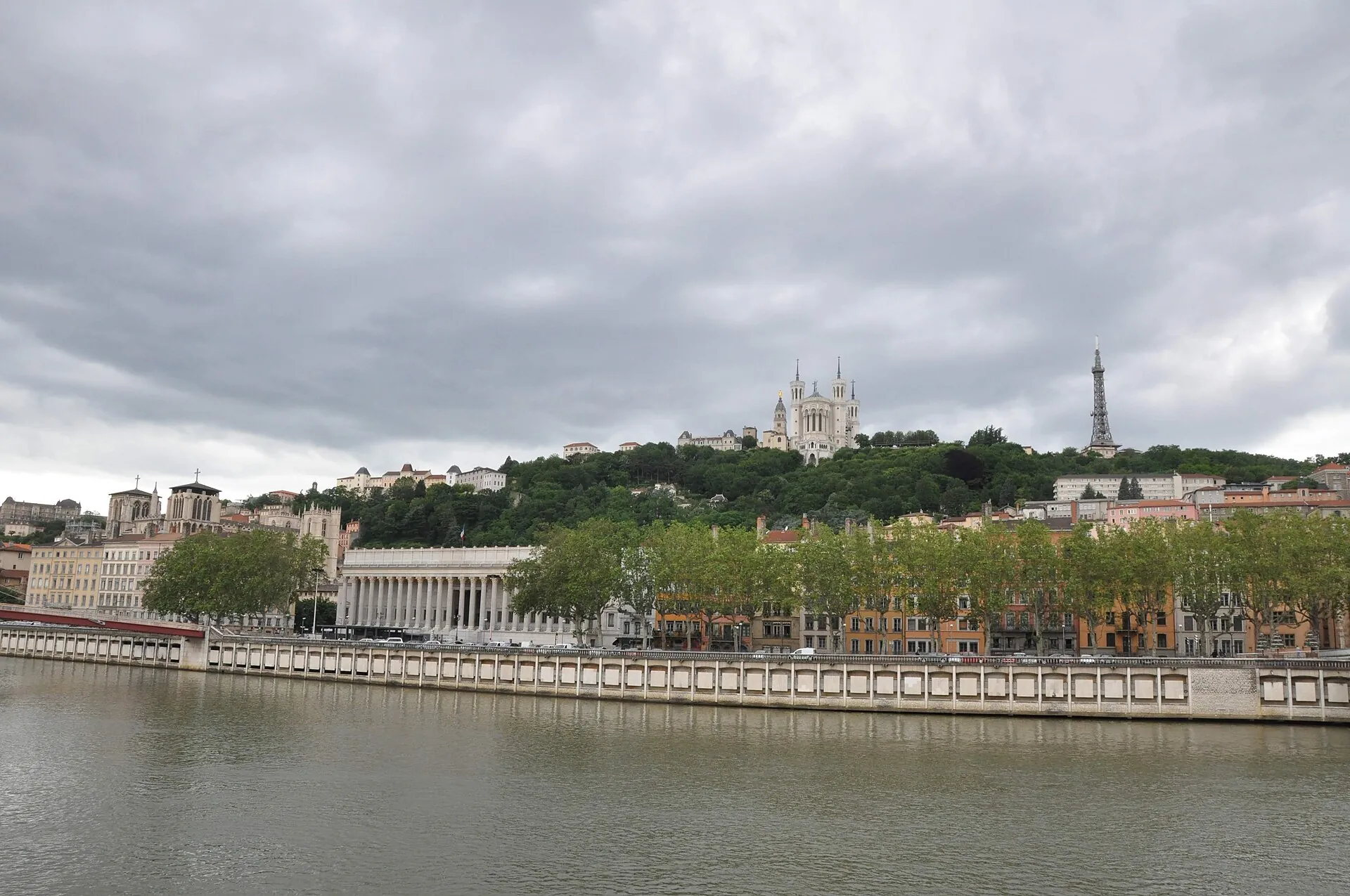
Fourvière looks out over the rivers and the city that grew around them. France’s national tourism site takes visitors from the hill into Vieux-Lyon, with its historic streets, bouchons and museums, then towards the Presqu’île. After the archaeology, the walk offers a sense of later urban and commercial life. Expect changes in elevation: the climb to Fourvière is substantial, while a funicular offers another way up. [1]
Lyon’s cuisine can be explored without booking a famous restaurant. A *bouchon* is a traditional restaurant centred on regional dishes. France.fr mentions quenelles, saucisson brioché and praline tart. Those names can help you read a menu, but they say nothing about the quality or current availability of a particular establishment. That calls for separate checking. [1]
The Halles de Lyon Paul Bocuse offer another view of the city’s food culture. Lyon’s first covered market opened in 1859; the present complex opened in 1971. Its own site describes food traders and places to eat under one roof. General shop hours differ from restaurant hours and from the schedules of individual traders.[7][8]
A manageable autumn day
One possible day begins at the Roman theatres, continues through Vieux-Lyon towards the Presqu’île and ends at the Halles. This is an editorial route linking places described in the sources, with no tested journey times. The Fête des Lumières is scheduled for 5 to 8 December 2026, according to the event’s own site, so it is not an October attraction. [1][6][7][9]
Practical point: A journey on or along the Rhône beyond the city needs further route research. [6][8]
Sources and image credits
- 1. France.fr, Lyon — accessed 19 October 2026: rivers, historic districts, Fourvière and food culture.
- 2. ONLYLYON Tourisme — accessed 18 October 2026: tourism context; homepage checked through a second fetcher.
- 3. UNESCO World Heritage Centre, Historic Site of Lyon — accessed 18 October 2026: confluence, historical layers and inscription.
- 4. Lugdunum, Fondation de Lyon — accessed 18 October 2026: foundation and strategic location.
- 5. Lugdunum, Théâtres romains — accessed 18 October 2026: theatres and present-day use.
- 6. Lugdunum, opening hours, reservations and prices — museum hours, theatre hours and price bands.
- 7. Halles de Lyon Paul Bocuse, Our history — accessed 18 October 2026: history and structure.
- 8. Halles de Lyon Paul Bocuse, Useful information — accessed 18 October 2026: distinction between general hours, restaurants and individual traders.
- 9. Fête des Lumières, official site — accessed 18 October 2026: announced December 2026 dates.
Image credits 1
Photo: Pymouss / Wikimedia Commons · CC BY-SA 4.0 · Image source

Image credits 2
Photo: Philippe Alès / Wikimedia Commons · CC BY-SA 4.0 · Image source

Euro Magazine · 20 October 2026