The Douro: what a boundary on paper does to a wine landscape
In 1756 the Douro became a regulated wine region. Behind the famous terraces there is also a business story: control of production, origin and trade.
Anyone buying a bottle of wine today reads a designation of origin and thinks nothing of it. Bordeaux comes from Bordeaux, chianti from Chianti. But behind such a name lie agreements about an area and what may be produced there.
In the Douro, a Portuguese royal charter of 10 September 1756 marked an important step in regulating the production and trade of port. The demarcation of the wine region was part of that system.
Why it was needed
The motive was not romantic. The aim was to regulate the production and trade of a valuable product.
Port was big money at the time, especially on the British market. Where there is big money, there is adulteration: wine from elsewhere sold under the famous name, dilution, added colouring. That undermines the price and ultimately the whole trade.
A demarcation solves this by moving the question. No longer: is this wine good enough to be called port, but: does it come from inside the line. That can be checked, and that is exactly why it worked.
What a boundary does to a landscape
Here lies the less noticed side of the story. A demarcation is not an administrative act that leaves the landscape untouched.
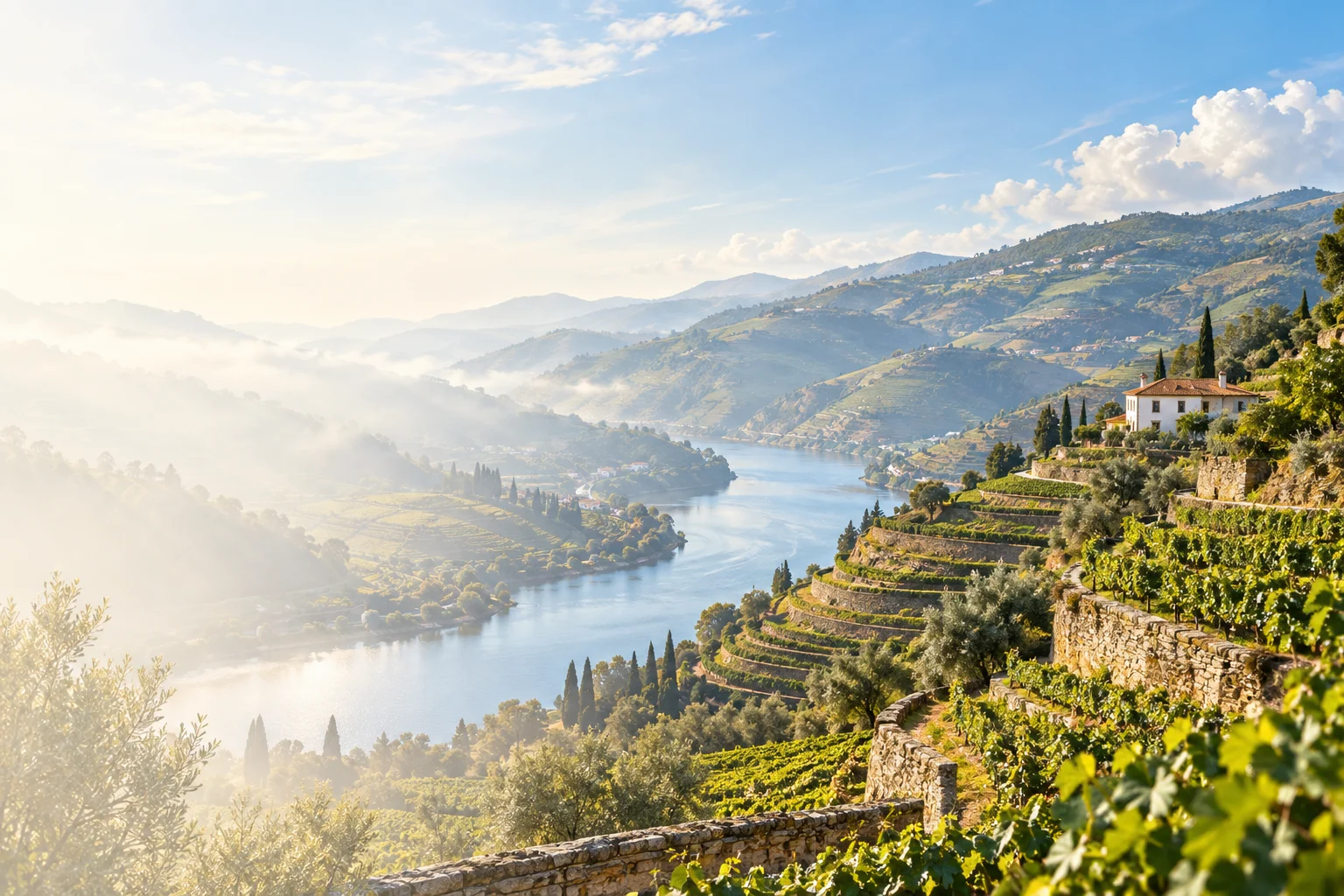
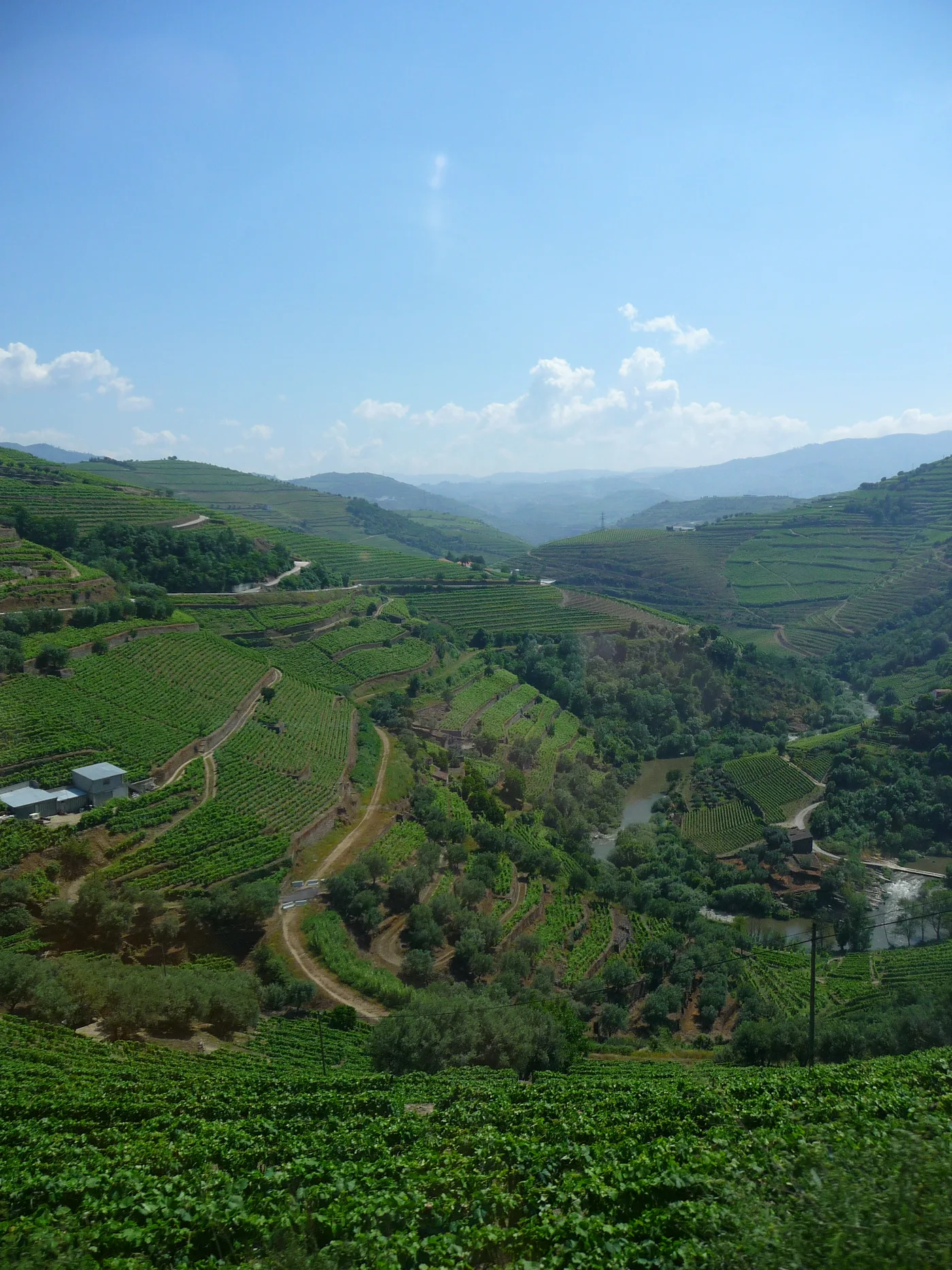
Once it is settled that only wine from inside that line fetches the good price, every hectare inside the line becomes valuable and every hectare outside it is worth something else. Terraces are built on slopes that are really too steep for them, because that is where it is permitted.
The steep, terraced valley sides of the Douro are therefore not only the result of geology and climate. They are also the result of a line on a map from 1756, which determined where it was worth cultivating a mountain by hand.
Why the cellars are across the river
A detail that confuses visitors: the famous port lodges are not in Porto but in Vila Nova de Gaia, on the other bank of the Douro.
That is not arbitrary but logistics. The wine was brought downstream and had to mature somewhere, and that happened in the cooler, north-facing warehouses on that southern bank, opposite the city.
The result is that the wine has three places: the terraces in the valley where it grows, the river it travelled on, and the lodges across the water where it lies. Anyone who visits only Porto sees the last third.
What the model became
The Douro is an early example of what a protected origin can do. Such a name ties a product to a demarcated area and to rules for its production.
That system is often defended by appeals to tradition and quality. The origin was more businesslike. Someone wanted to know whether what was in the cask really came from where it claimed to come from, and so drew a boundary.
That it went on to shape a landscape now visited for its beauty was not part of the plan.