Copenhagen: not a cycling people, but a decision after the oil crisis
Around 1970 the bicycle's share in Copenhagen had fallen to ten percent. What happened next was not national character but policy, and it began with petrol rationing.
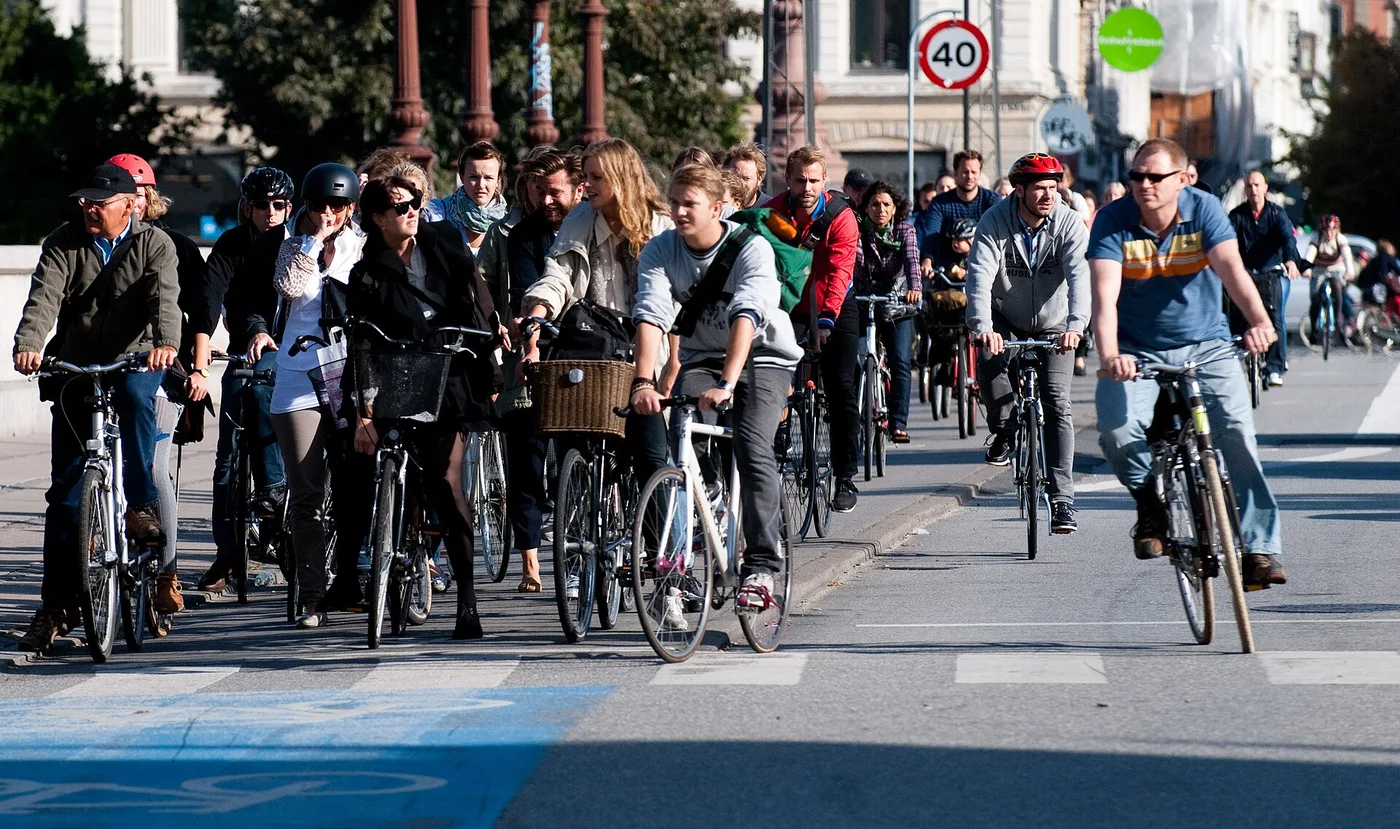
The image is familiar: Copenhagen as the city where everyone cycles, as if it had always been that way. The image is true for now and not for history.
In the late 1960s and early 1970s the bicycle's share of traffic fell to a low of ten percent. Copenhagen was going the same way as almost every European city: space for the car, and cyclists getting by in between.
What turned it around
In those years Denmark had switched from coal to cheap foreign oil, and had become heavily dependent on it.
When the oil crisis of 1973 came, it therefore hit Denmark harder than most countries. The government had to ration petrol and introduce car-free Sundays to save supplies.
That is the turning point. A country that cannot afford petrol starts looking at its streets differently. Many city dwellers did not mind those car-free Sundays either; they saw what a city without cars is like.
Why it lasted
A crisis alone changes nothing permanently; when the oil price fell, most countries simply carried on where they had left off. Not in Copenhagen, and that is because of what followed: an extensive network of cycle paths.
That is the core, and it is easily skipped. Not campaigns, not information, but built infrastructure. A cycle path separated from the carriageway changes the calculation of someone who is in two minds, and that calculation is what it is all about.
The city also had three things in its favour that cannot be built: dense development, short distances and flat terrain. That is not a merit but a starting position, and it explains why this model cannot simply be copied to a hilly, sprawling city.
Where it stands now
Every day 1.2 million kilometres are cycled in Copenhagen. That figure says more than a percentage, because it is about distance travelled and not about how many people ever sit on a bicycle.
The city is thus regarded as one of the most bicycle-friendly in the world, and Denmark itself now presents cycling as part of the national culture.
Why that last point is also a trap
As soon as something is called culture, it seems innate. And that is exactly the wrong lesson for cities that want to follow suit.
Danish cycling culture is about fifty years old and began with an oil shock, petrol rationing and then concrete. Anyone who thinks Copenhagen cycles because Danes simply cycle is mistaking the end result for the cause.
The useful part of this story is less romantic and much more hopeful: the ten percent share did not rise because people changed their minds, but because something was built that made changing one's mind reasonable.