London brings together all nine of Jan van Eyck’s portraits
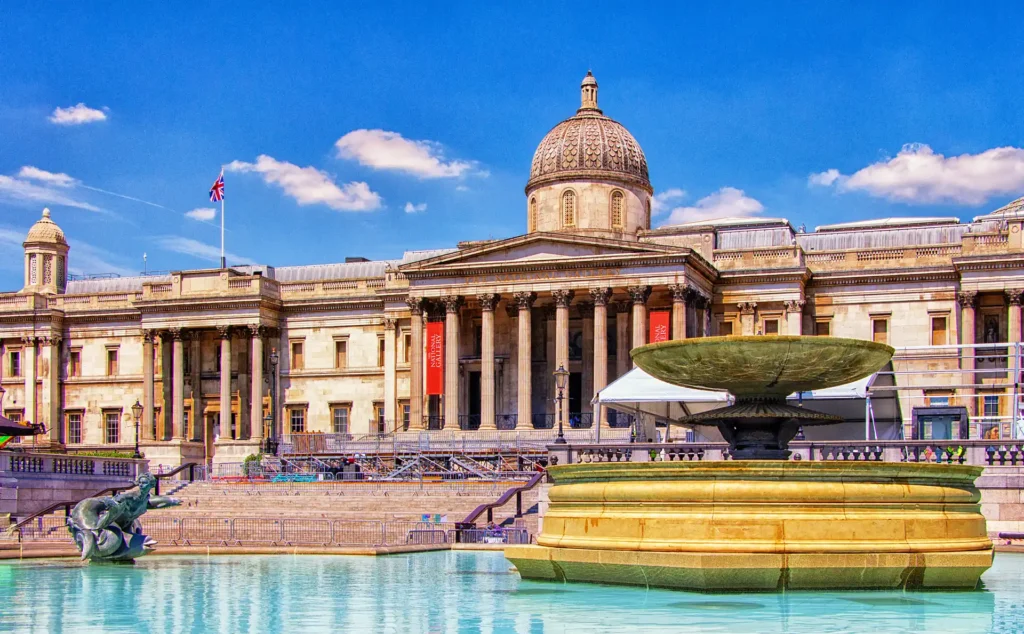
From 21 November, all nine painted portraits by Jan van Eyck hang together at the National Gallery, for the first time in history. The exhibition runs until 11 April 2027.
A man in a flamboyant red hat looks straight at you. The panel measures 26 by 19 centimetres, smaller than a sheet of A4. On the frame, in Greek letters, is the motto ‘Als Ich Can’, an abbreviated Flemish saying and at the same time a pun on the painter’s name, roughly: as I can, but not as I would. At the bottom, in abbreviated Latin, it says that Jan van Eyck painted it on 21 October 1433.
The panel belongs to the National Gallery in London, where it is called Portrait of a Man (Self Portrait?), with a question mark after the self-portrait. It has just been newly conserved. From 21 November it hangs in Van Eyck: The Portraits, the first exhibition devoted entirely to Van Eyck’s portraits. It runs until 11 April 2027 and is ticketed. All nine of his painted portraits from across Europe are included, about half of the twenty or so surviving pictures by his own hand.
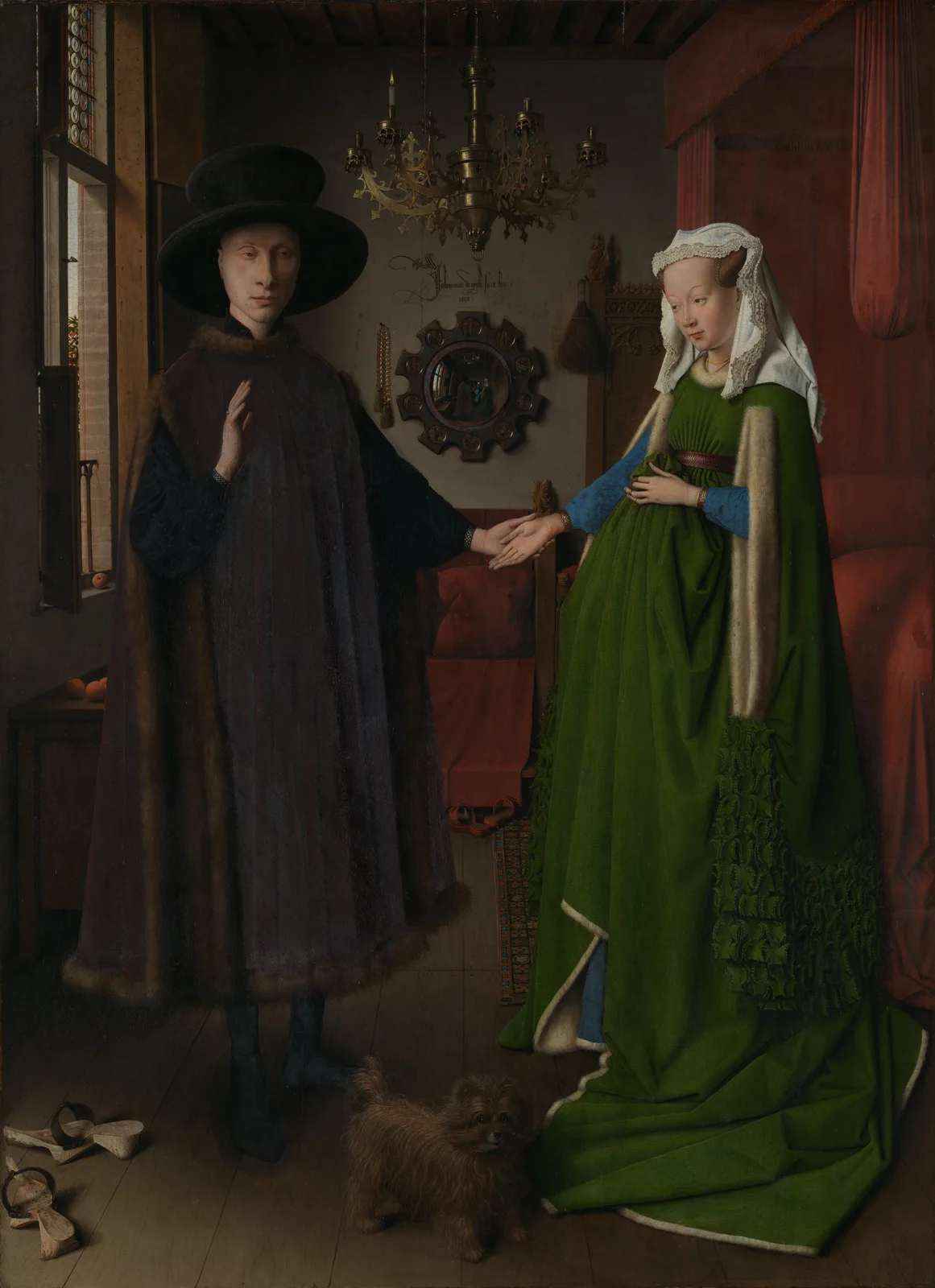
The most famous panel does not have to travel. The Arnolfini Portrait of 1434 (82.2 by 60 centimetres) belongs to the National Gallery itself. It now hangs beside Portrait of a Man (Giovanni? Arnolfini) of about 1440, lent by the Gemäldegalerie in Berlin. The two have never hung together before. The Arnolfini Portrait is the most visited painting page on the gallery’s website. Above the mirror it says ‘Johannes de Eyck fuit hic. 1434’, Jan van Eyck was here. Infrared imaging shows that the chandelier, the dog and the discarded shoes were added late in the work. The gallery bought the painting in 1842 for 600 guineas.
The second pairing is more surprising still. Next to the newly conserved portrait of the man in the red hat hangs Margaret, the Artist’s Wife of 1439 (32.6 by 25.8 centimetres), from the Groeningemuseum in Bruges. It is the earliest known portrait of a woman who was not an aristocrat. The Kunsthistorisches Museum in Vienna is taking part too. It is lending both of its Van Eycks at once, for the first time in its history.
Emma Capron, curator of Early Netherlandish and German Paintings at the National Gallery, says: ‘Some stories do not have a beginning. Portraiture is one of them.’ Portraiture appears fully formed in the 1430s in Van Eyck’s work, Capron says, and his sitters look back at the viewer. Gabriele Finaldi, director of the National Gallery, calls Van Eyck ‘a foundational figure in the European history of art’.
His sitters were not only kings, queens and aristocrats. Van Eyck also painted wealthy merchants, skilled craftsmen and relatives. He was active from 1422 to 1441 and probably came from Maaseik near Maastricht. He worked for John of Bavaria and then for Philip the Good, Duke of Burgundy. In 1428 the duke sent him to Portugal to paint Isabella of Portugal, his future wife.
The exhibition comes with a catalogue, the first monograph on Van Eyck’s portraits. It deals with his technique, the original frames, the inscriptions and the debate over who the sitters were. During the same period the gallery is also showing Renoir and Love, until 31 January 2027.
Practical
Location: National Gallery, London
Van Eyck: The Portraits: 21 November 2026 to 11 April 2027
Admission: paid
Also on view: Renoir and Love, until 31 January 2027 (paid)
Info: nationalgallery.org.uk