Bagna càuda: a warm sauce in the middle of the table
Garlic, anchovy and olive oil infuse together over the lowest heat into a warm sauce. Around it lies a pile of vegetables, raw and cooked, which everyone dips in themselves. Not a dish to eat in a hurry.
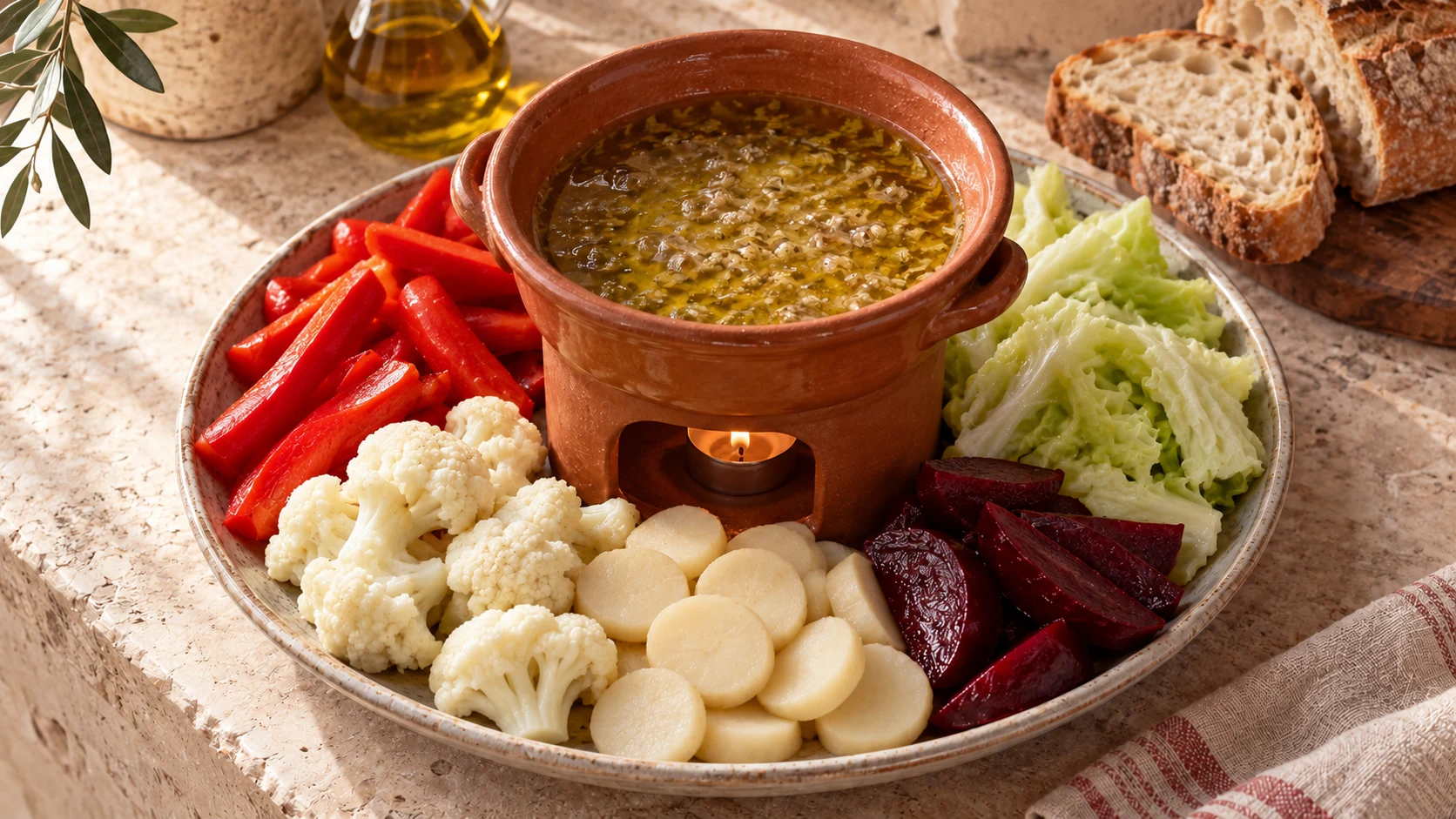
Bagna càuda, Piedmontese for ‘warm sauce’, is according to the Accademia Italiana della Cucina the most characteristic dish of the cuisine around Asti. It began as a sauce of local olive oil with plenty of garlic. The anchovy came later, with the anchovy traders who travelled the salt road through the Maritime Alps. It is a dish for the cold months, from September to spring. The canonical recipe, registered with a notary in Asti in 2005, allows 12 heads of garlic and 600 g of anchovies for 12 people. Versions in which the garlic is first boiled in milk are jokingly called ‘heretical’ there. Our home version is one of those heretical ones: with milk and with about half the garlic and anchovy per person.
Serves 4 as a starter to share · Preparation: 30 min · Cooking: 45 min
Times are guidelines; preheat during preparation where possible. Allow extra time to cool food before storing it.
Equipment
Small heavy-based pan or earthenware pot, saucepan, mortar or fork, réchaud or tealight warmer to keep warm.
Ingredients
- 70 g peeled garlic (about 2 heads)
- 250 ml whole milk
- 100 g anchovy fillets in oil, drained
- 200 ml extra virgin olive oil
- 20 g unsalted butter
- 2 red peppers, about 300 g together
- 300 g cauliflower florets
- 300 g Jerusalem artichokes
- 300 g cooked beetroot
- 200 g inner leaves of a savoy cabbage or white cabbage
- 200 g baguette or other firm bread
Method
- Halve the garlic cloves lengthways and remove any green shoots. Bring them to the boil with the milk in the saucepan and simmer gently for 15–20 minutes, until very soft. Drain and discard the milk.
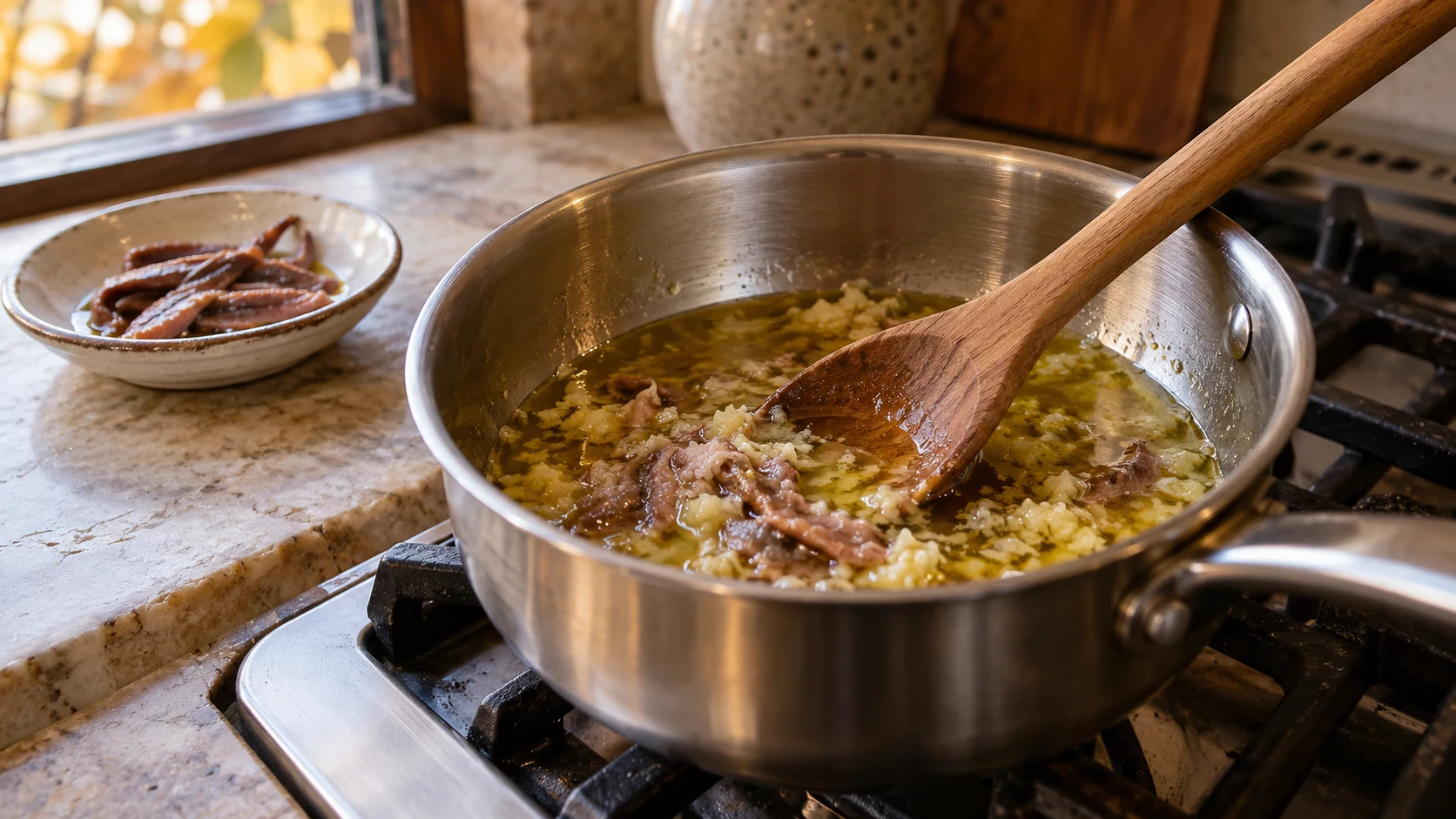
- Mash the garlic finely. Put the garlic, anchovies and oil in the small pan and heat over the lowest heat for 20–25 minutes. Stir regularly and press the anchovies to break them down; the sauce may bubble gently but must not fry or brown.
- Wash all the vegetables. Meanwhile, cook the cauliflower florets for 4–5 minutes and the peeled Jerusalem artichokes, in 1 cm slices, for 8–10 minutes in salted water, until just tender. Drain. Cut the peppers, beetroot and cabbage into strips or wedges for dipping, and the bread into pieces.
- Stir the butter into the sauce. Put the pot on a réchaud or tealight warmer on the table so the sauce stays warm while you eat, and dip vegetables and bread into it. Do not leave the sauce on the table for longer than 2 hours.
Storage
Best eaten straight away. A tealight keeps the sauce warm at the table, but it is not a way of storing it. If you want to keep leftovers, put them covered in the fridge at 4 °C no later than 2 hours after serving. Use within 2 days and reheat once until the sauce is hot all the way through. Never store garlic and anchovy sauce at room temperature.
Allergens
Fish (anchovy), milk and wheat/gluten (bread).
Sources and image credits
- Accademia Italiana della Cucina — Civiltà della Tavola 265: ‘Una festa per la bagna cauda’ (Donatella Clinanti, Accademica di Asti) en ‘La ricetta’
- Voedingscentrum — 5x veilig met kliekjes
Home › All stories › Bagna càuda: a warm sauce in the middle of the table
Bagna càuda, Piedmontese for ‘warm sauce’, is according to the Accademia Italiana della Cucina the most characteristic dish of the cuisine around Asti. It began as a sauce of local olive oil with plenty of garlic. The anchovy came later, with the anchovy traders who travelled the salt road through the Maritime Alps. It is a dish for the cold months, from September to spring. The canonical recipe, registered with a notary in Asti in 2005, allows 12 heads of garlic and 600 g of anchovies for 12 people. Versions in which the garlic is first boiled in milk are jokingly called ‘heretical’ there. Our home version is one of those heretical ones: with milk and with about half the garlic and anchovy per person.
Our own AI-generated illustration accompanying the recipe.