Marseille: the Foire aux santons runs until 3 January 2027
On 14 November the 224th Foire aux santons opens on the Vieux-Port. About small clay figures for the nativity scene, a ban during the French Revolution and a fair that began in 1803 with three sellers.
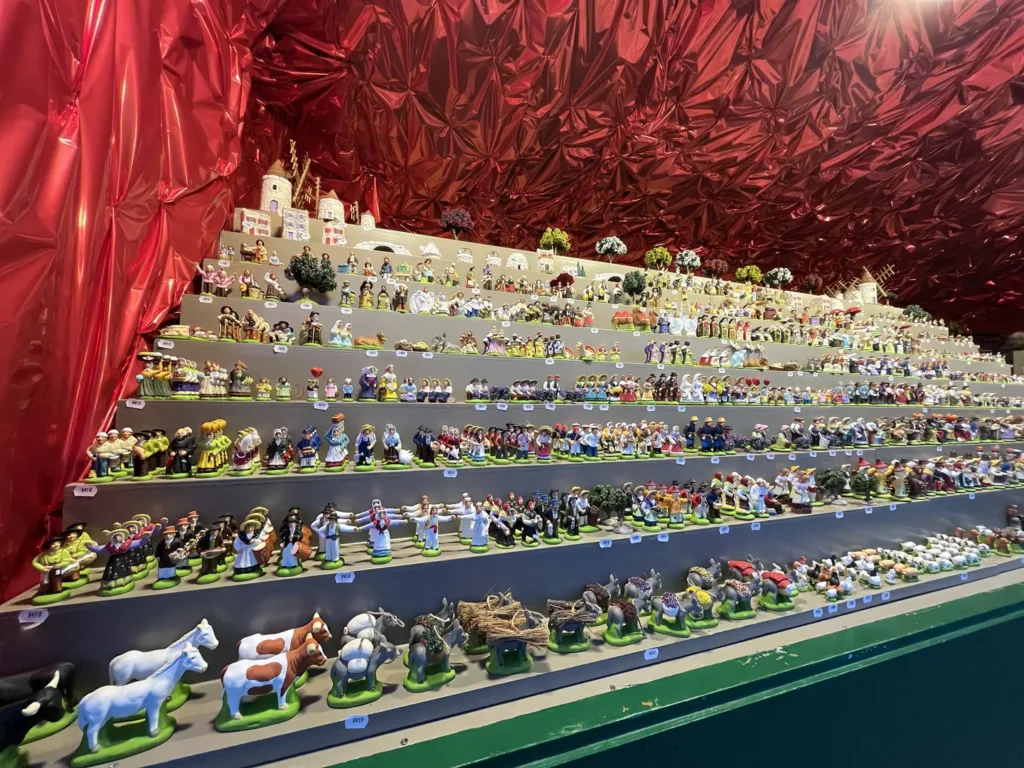
On 14 November 2026 the stalls of the santonniers, the makers of small clay figures for the nativity scene, open on the Quai du Port in Marseille. The 224th Foire aux santons runs until 3 January 2027 and is free to enter. It opens with a Mass in Provençal at the church of Saint-Cannat-les-Prêcheurs, followed by a costumed parade with tambourines.
The first santons appeared in Marseille in the twelfth century, as small carved Nativity figures in churches. The word santon probably comes from santibelli, a clay figurine, and was first recorded in 1826. The first living nativity scene appeared in 1223 in Italy, introduced by Saint Francis of Assisi. Franciscan monks brought the custom to Provence. During the French Revolution nativity scenes in churches were banned. The people of Marseille then set them up at home, in secret, with cloth, papier-mâché and even bread: whatever was available.
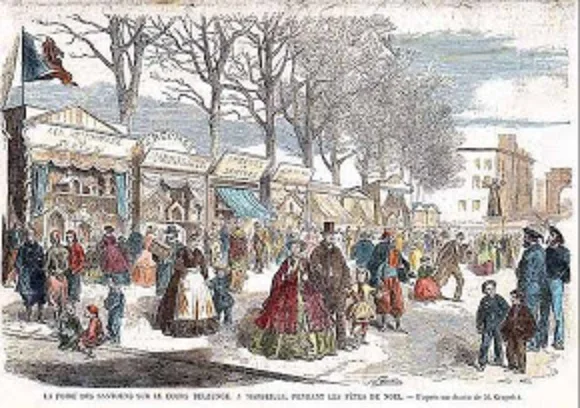
At the end of the eighteenth century the santon industry got going. Jean-Louis Lagnel moulded the figures from clay so that ordinary people could afford them. His santons were not yet fired. Firing came much later: Thérèse Neveu of Aubagne is credited with it, which made the figures sturdier. Aubagne’s clay industry goes back to Roman times and at its peak employed a quarter of the population. Early nativity scenes used painted and gilded wood, later santons are clay.
In 1803 the santons made their first public appearance at the fair on the Cours Saint-Louis in Marseille, with three sellers. In the nineteenth century the first master santon-makers emerged, and Marseille became the capital of the santon. The fair later moved to the Allées de Meilhan, the Place Général de Gaulle and the Vieux-Port, where it stands now. In 1886, 180,000 santons were sold.
At first the figures showed the birth of Christ. Later people from everyday life joined them: the priest, the innkeeper, the fishmonger and the shepherd. The Provençal nativity scene also has the miller with his sack of flour on a donkey, next to the farmer’s wife, the schoolmistress and the village officials. The simple-minded Pistachié belongs there, Pimpara the travelling knife grinder who always has gossip, and the angel Bouffarel, who blows a trumpet to announce the child.
The best detail is a nativity scene that does not stand still. In Daniel Coulomb’s scene the pregnant Virgin is replaced on 24 December at midnight, at the moment the infant is laid in the crib. Coulomb made that pregnant Virgin after consulting a priest. It made headlines and more than 1,000 were sold in the first two days. A nativity scene is then not a picture but a story that gets its next chapter on a fixed evening. In Aubagne the ritual goes further: the Pagnol figures are put away on 3 December, on 4 December, the feast of Sainte Barbe, the traditional nativity figures take their place, and on 2 February, Candlemas, they swap back.
A santonnier gathers twigs and plants for the accessories. Thyme can serve as a tiny olive tree, with pinhead-sized black beads glued on as olives. The santons are arranged by size to create perspective, and the costume details are careful, such as a green wedding dress or a housewife wearing her house keys on her clothes. About twenty stalls of santon-makers stand at the fair. The makers commit to traditional methods, such as making santons in Provence from clay. A certification exists, Fabrication Provence. Every weekend there is a santon workshop, there are donkey rides daily and cookery workshops on Sunday mornings. On Wednesdays and at weekends folk groups perform, with music, dance and signing sessions.
The nativity scene changes with the times too. Besides the priest, the shepherd and the fishmonger there are now santons of famous people: Lino Ventura, Marcel Pagnol, Fernandel and this year Jean-Claude Dusse. Put the figures of the past centuries side by side and you see how the village in the manger kept becoming a different village.
Marseille is not the only city with such a market. Well-known santon fairs are also held in Aix-en-Provence, Arles and Aubagne. In Marseille the fair began in 1803 with three sellers. Now about twenty stand there, by the water, after earlier moves. What was once an emergency solution in the living room has become a yearly market of six weeks.
Practical
Runs until: 3 January 2027 (starts 14 November)
Place: Quai du Port, Vieux-Port, Marseille
Entry: free
Edition: the 224th Foire aux santons
Sources and image credits
- Santon fair and santon-makers in Marseille (Marseille Tourisme) — Edities, data, geschiedenis van de foor, programma en figuren.
- Marseille déclare ouverte la saison des santons (persbericht, 13-10-2026) — Data 2026, plaats en animaties.
- The Santons of Provence: A History (France Today) — Klei, bakken, Revolutie, kerstfiguren en de eerste foor van 1803.
Image credits 1
Photo: Benoît Prieur · CC0

Image credits 2
Photo: M.Crapelet middle 1800s · Public domain
