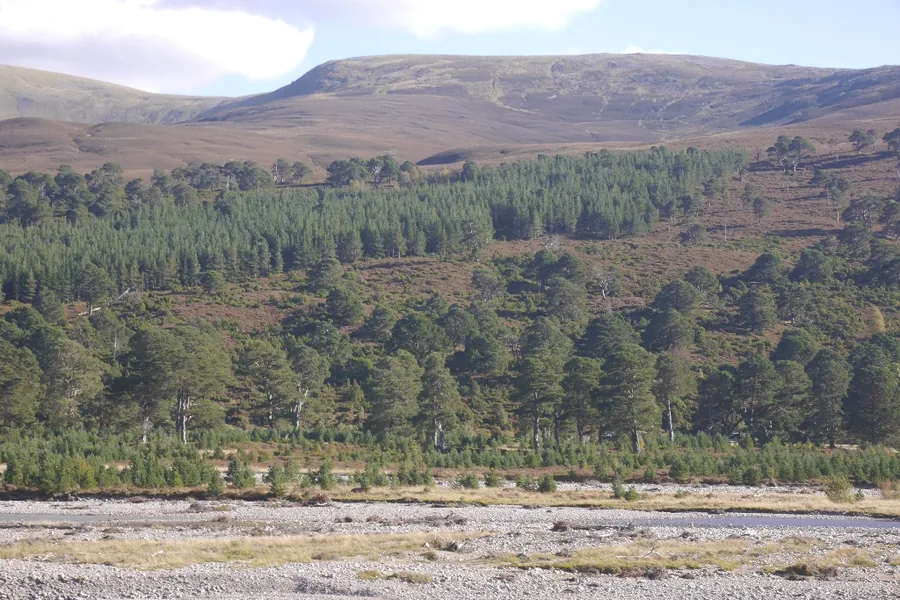
Cairngorms: laser maps show how millions of young trees are returning on their own
An aircraft carrying a laser scanner counted more than six million trees in the Scottish national park. Over 40 per cent are young saplings, and they are largely growing there without planting. The key lies with the deer.
On Thursday 24 September 2026, a research team led by the University of Cambridge announced what an aircraft with a laser scanner had seen above Scotland's Cairngorms: young trees are spreading again across land where there has been no forest for centuries. The study appeared in the scientific journal Journal of Applied Ecology. It concerns the area of Cairngorms Connect, a partnership of land managers in the national park.
The figures are large. The team counted more than six million individual trees over 569 square kilometres, along with the precise height of each tree. Of these, 2.65 million were shorter than five metres, just over 40 per cent. That is the young growth, the forest of the future.
Why the forest did not come back for centuries
The Cairngorms still hold ancient woods of the Caledonian forest. The park authority describes that forest as Scots pine above juniper, among oak and rowan, on a floor of heather, blaeberry and cowberry. This forest once covered a much larger part of the Scottish Highlands.
How much of it remains depends on what you measure. According to the Cambridge researchers, 4 per cent of Scotland's original native woodland is left. Cairngorms Connect puts it at 1 per cent of the original pinewood. The landscape now consists largely of heather moorland, peat and grassland, the researchers write.
Why did the forest not grow back by itself? The answer grazes on the slopes. Red deer and roe deer eat the young saplings before they get a chance. Cambridge names this browsing by deer, together with the high cost of planting behind fences, as a brake on woodland expansion in Scotland. And in this landscape the deer have almost no natural predators left.
A partnership that plays the predator
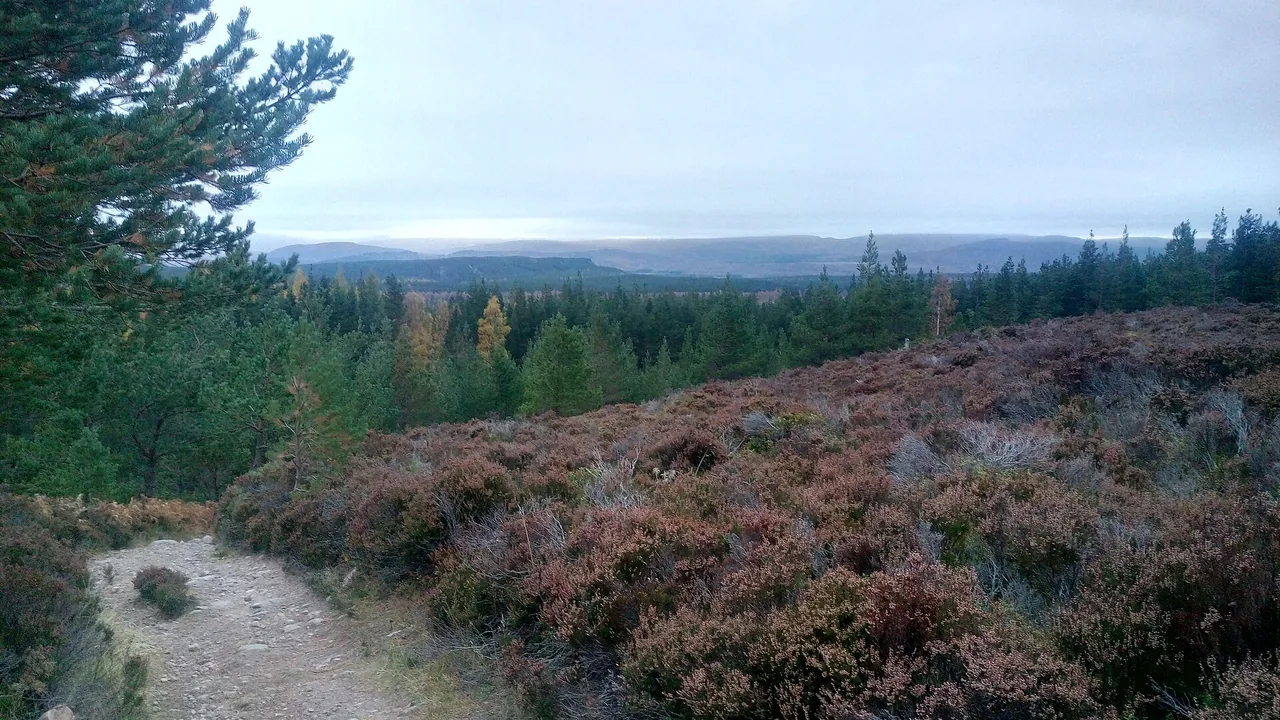
Cairngorms Connect is a partnership of WildLand Limited, NatureScot, Forestry and Land Scotland and RSPB Scotland, with the national park as a supporting partner. According to the partners, the area covers more than 600 square kilometres. They work to a 200-year vision and want to double the existing forest in size, mainly through natural regeneration: trees that seed themselves.
The means is deer management across 60,000 hectares, beyond the boundaries of the individual estates. Cairngorms Connect describes this as taking over the role of a natural predator: keeping deer on the move and culling part of the population every year. For this, the partners work with up to 15 trained stalkers from the area.
The study shows what this has achieved. After a decade of partnership, according to Cambridge, more than 5,235 hectares of formerly open land now carry young forest, counted as land with more than 100 trees per hectare. That forest has largely arisen on its own. Only where there are no seed trees nearby has planting been done on a small scale.
The young trees stand mainly at the edges of existing forest, where most seeds fall. Yet the researchers also found new trees more than half a kilometre from the forest edge. And the type of soil matters: on wet, peaty ground fewer trees took hold than on dry heath.
How to measure a forest from the air
The researchers worked with lidar, from a light aircraft at a height of 600 metres. The scanner fires laser pulses at the ground in rapid succession. They bounce back off trees and other surfaces. From the time each pulse takes to return, the team builds a three-dimensional picture of the landscape, far more detailed than measurements on foot can provide.
The Cambridge team analysed that data with a method supported by artificial intelligence. Measurements on the ground and field counts by Cairngorms Connect and RSPB Scotland confirmed that the results are correct.
"Being able to map young trees this accurately and on such an enormous scale is a breakthrough for monitoring nature recovery," said researcher Aland Chan of Cambridge's Centre for Landscape Regeneration, who co-led the work, in the university's press release.
The park authority also has big plans. Within the Cairngorms 2030 programme, the Cairngorms National Park Authority wants to expand the area covered by native trees in the park by at least 21,000 hectares between 2023 and 2028. This also includes planting, of species such as aspen and rare montane shrubs.
The forests are home to species such as the capercaillie and the red squirrel, which according to the researchers are now confined in Scotland to the remaining forest fragments.
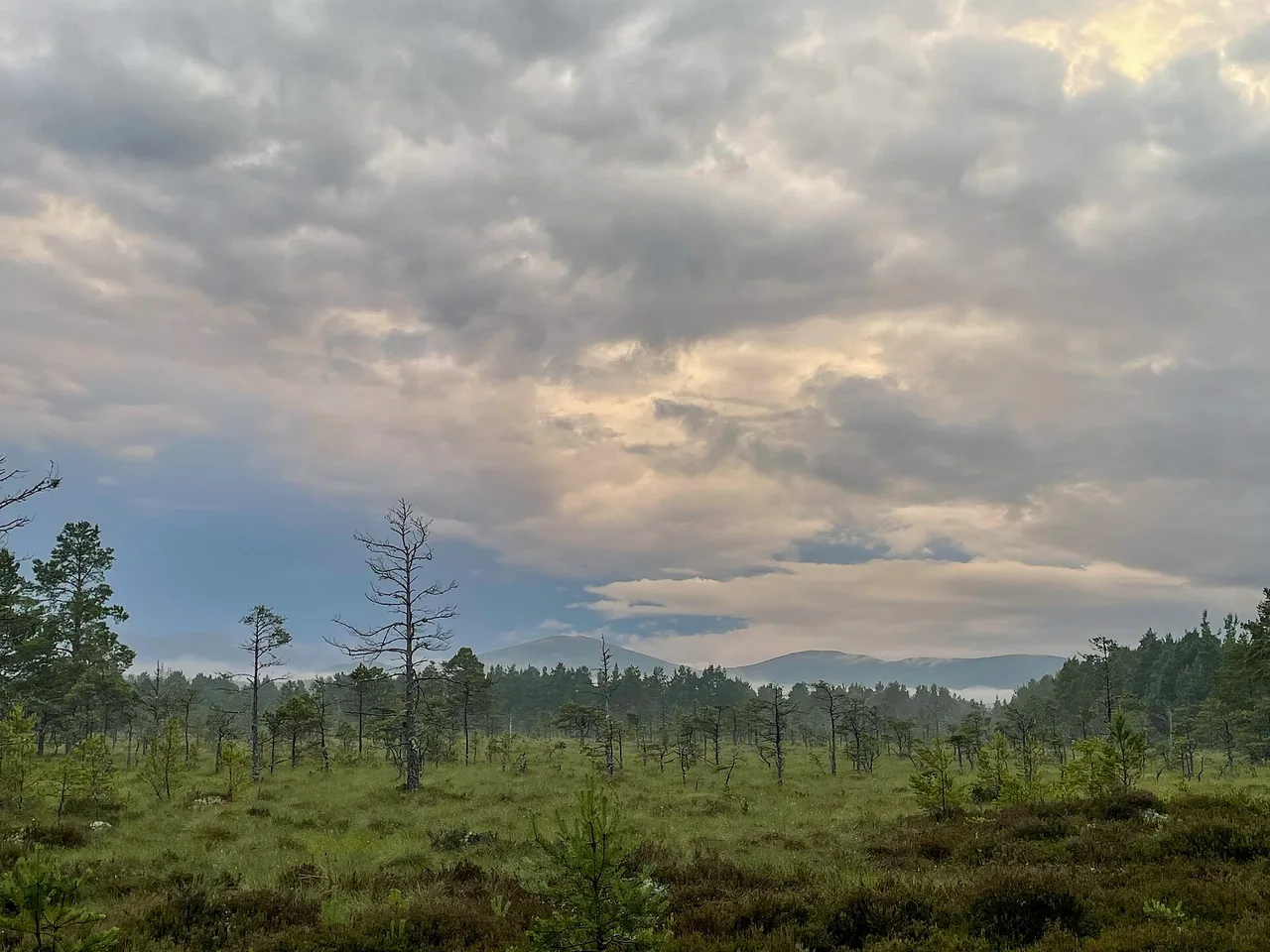
Open, boggy heath with scattered young pines and a few dead trees, with the Cairngorms in the background under a cloudy sky (July 2024). · Stijndg, CC BY-SA 4.0