Plitvice: lakes that build their own dams
Lakes lie in steps behind one another, separated by barriers nobody built. They are still growing, and they can also give way.
Walking the boardwalks of Plitvice you see water dropping from basin to basin over rims that look built. They are not built. They were deposited, by the water itself, and they are still rising.
The park lies in the central part of Croatia, in the lower reaches of the Dinarides, and with almost thirty thousand hectares it is the country's largest national park.
Why the water makes stone here
The ground is karst: limestone through which water passes, dissolving lime along the way. The water in this system is therefore naturally supersaturated with calcium carbonate. It carries more lime than it can really hold in solution.
As soon as conditions change, for instance where water accelerates, splashes and loses carbon dioxide, that lime precipitates. It settles on the bed, on the banks, and on anything lying in the current: branches, stones, plants.
This is how tufa forms. Layer upon layer, until a barrier stands that holds the water back and a lake forms behind it. That barrier then keeps growing, because the water keeps running over it and keeps depositing lime.
Mosses as masons
Here it becomes remarkable. This is not a purely chemical process. Living organisms take part, above all mosses, algae and aquatic bacteria.
Those organisms give the lime a surface to settle on and influence the conditions under which it does. The result is a rock that is porous, at once hard and fragile, and that carries the shape of the plants on which it grew.
A tufa barrier is therefore not a dam built upon the water, but a dam built up by water and life together, which lasts only for as long as both keep working.
A landscape that is not finished
That has a consequence easily missed: this landscape does not stand still. The lake system changes constantly, as barriers grow and as they erode.
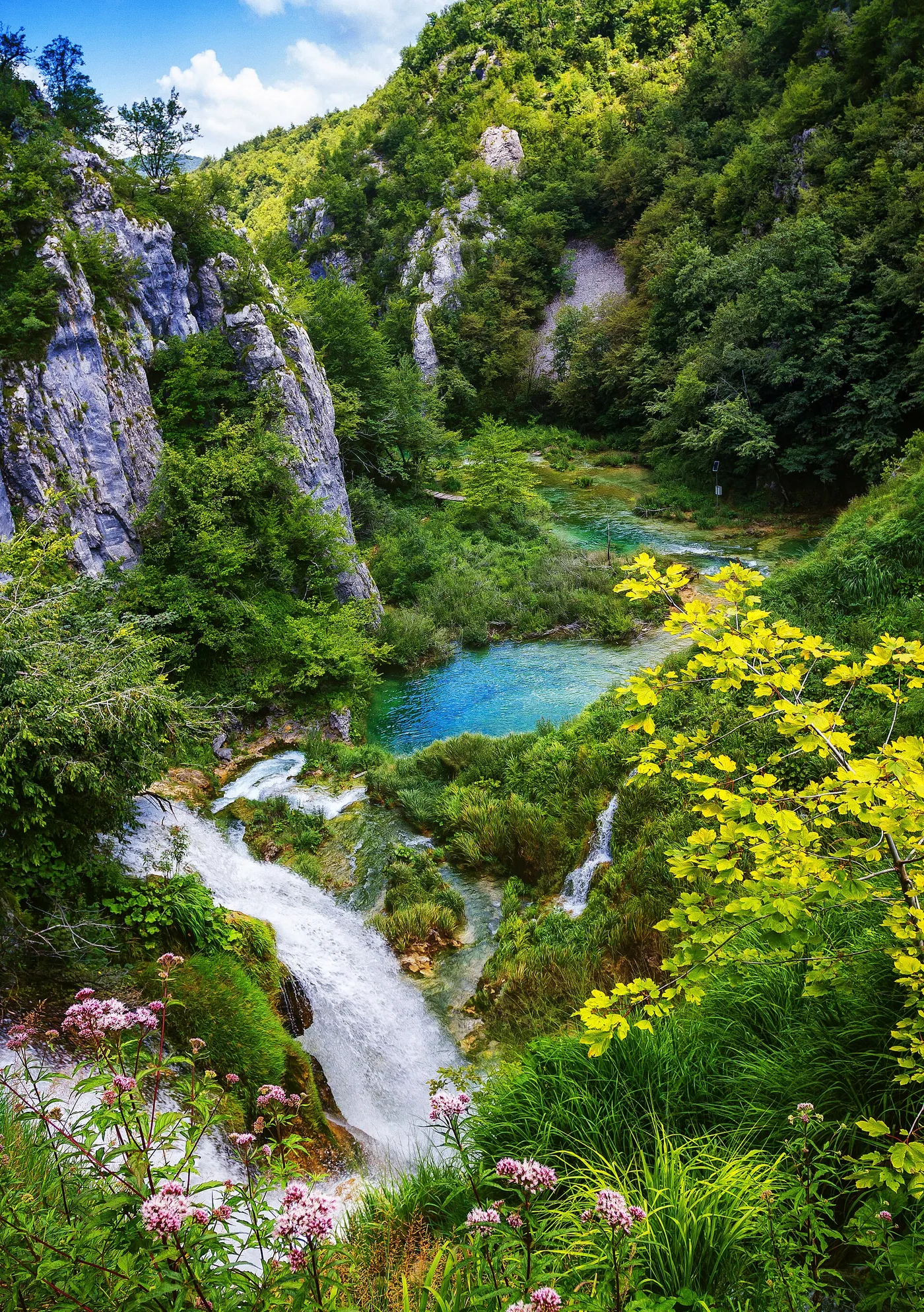
A barrier can give way. A lake then drains or changes shape, and somewhere further along a new deposit begins. What you see in a photograph from 1900 is not exactly what stands there now, and what stands there now is not what will be there in a hundred years.
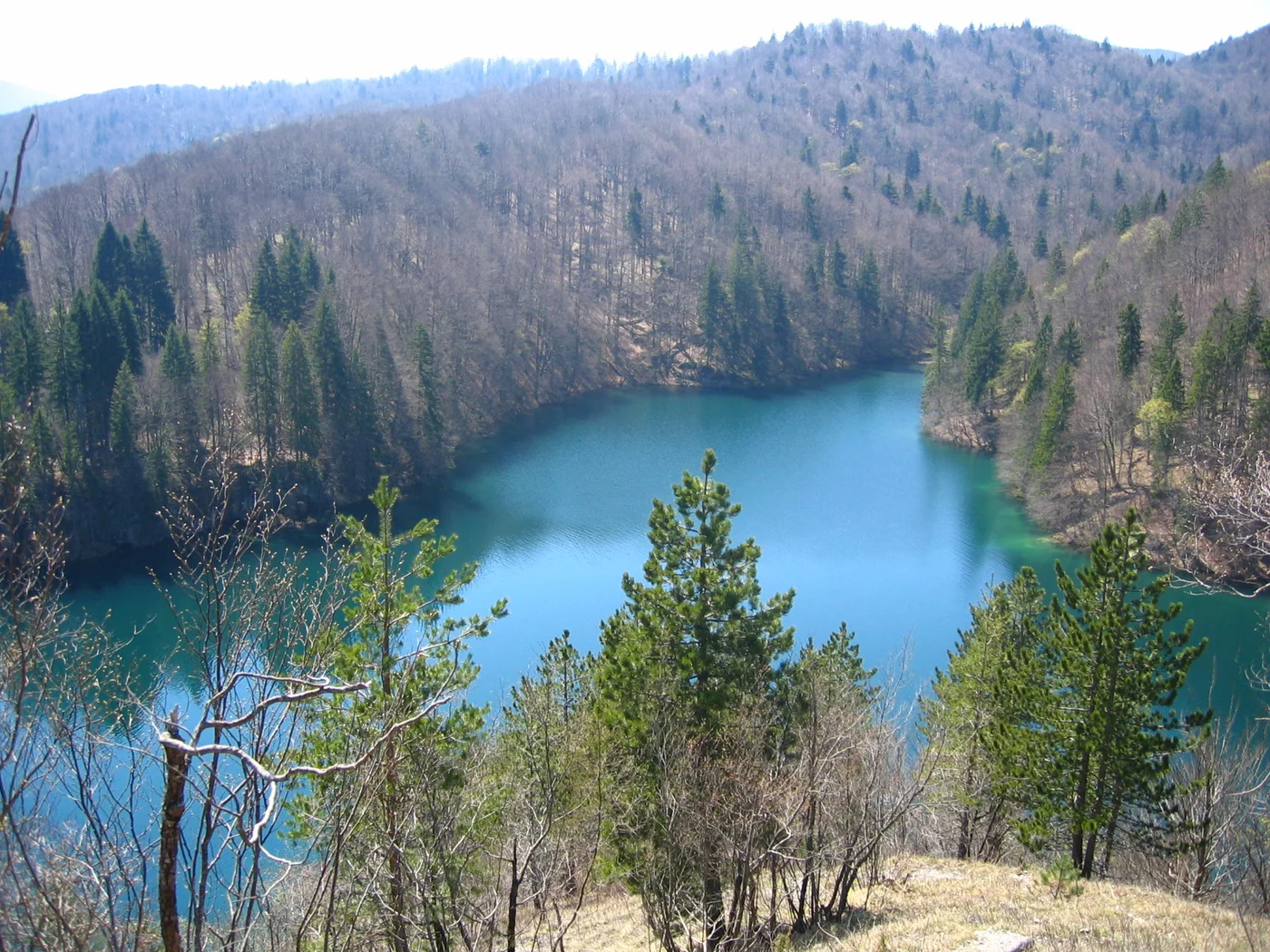
The lakes fall into two groups. The upper ones formed on dolomite, with gentle relief and shores that are not too steep, enclosed by thick forest. The lower ones are smaller and shallower and lie in a limestone canyon, with partly steep sides.
What stands around it
The forests are not scenery. They are essential to the continuity of the geochemical processes in the water system, above and below ground: they hold water, regulate the supply and protect its composition.
Within those forests lie eighty-four hectares of old-growth beech and fir. And brown bear, grey wolf and lynx range through them, alongside many rare species. The meadows are known for their rich flora.
The tufa barriers themselves are habitat too, for highly specialised communities of non-vascular plants, mosses, which can grow like that nowhere else.
Why this has been famous since the nineteenth century
The appeal of Plitvice has been acknowledged since the late nineteenth century, long before mass tourism existed.
That is not only aesthetics. It is a rare combination: a large, coherent system of lakes separated by natural dams, with waterfalls between them and colours that differ by the day and the season, all produced by a process you can watch working on the spot.
That last point is the finest. Most landscapes show you the result of something that happened long ago. Plitvice shows you what is going on now.