The Camargue: a delta that is half man-made
Flamingos, white horses and salt flats where the Rhone meets the sea. Almost everything you see there has been shaped partly by human hands.
The Camargue lies where the Rhone splits and runs into the Mediterranean. It is the image of untouched nature: sheets of water to the horizon, pink birds, herds of white horses.
That image deserves a correction, and the correction makes the area more interesting rather than less.
People have been here for millennia
People have lived in the Camargue for thousands of years, and they have changed the landscape profoundly: drainage works, dykes, rice fields and salt pans.
A large part of the outer Camargue has been drained for agriculture. What remains is therefore not a remnant that happened to be left alone, but an area whose water management is largely determined by what people have built.
The flamingo lives in a factory
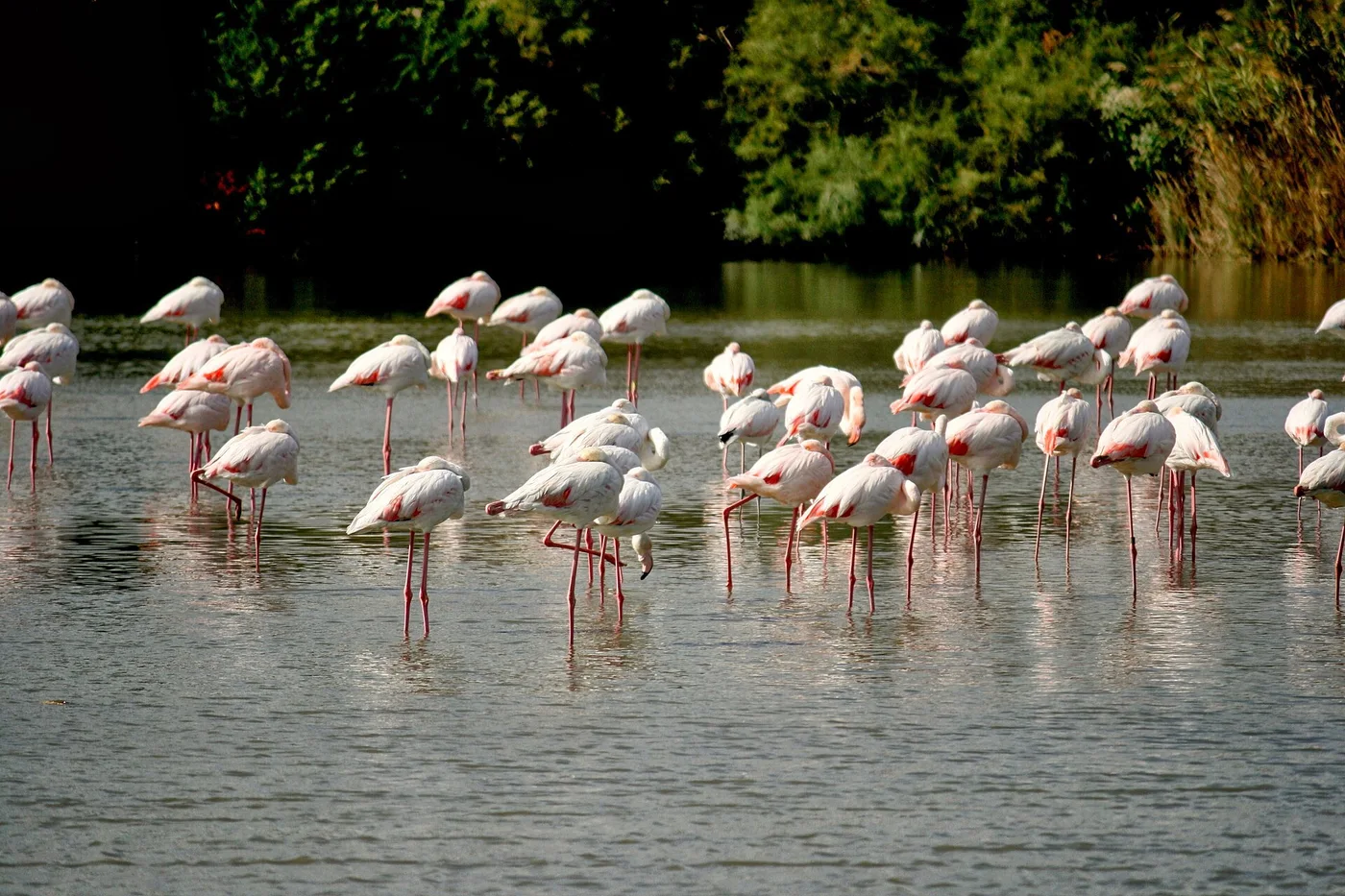
This is where it gets remarkable. The Camargue is designated an Important Bird Area, and the flamingo is its showpiece: this is one of the few places in Europe where the species lives.
But where those birds stand is the point. The salt pans form their habitat. These are basins built to let seawater evaporate and extract salt from it.
Flamingos eat small crustaceans and algae that thrive in extremely salty water. A salt pan is ideal for that: shallow, warm, still and saltier than the sea. What was laid out as an industrial site turns out to be exactly the habitat the species needs.
The pink of the feathers also comes from that food. The colour everyone comes to see comes from the diet, and that diet grows in tanks dug for the salt trade.
The horses and the cattle
Camargue horses and Camargue cattle roam the marshes. The white Camargue horse is a breed of its own and is ridden by the gardians, the herdsmen of the region.
That too is not wilderness in the strict sense. These are kept animals in a semi-open landscape, and their grazing keeps that landscape open. Without them, part of it would become overgrown.
Plants that tolerate salt
The native flora is adapted to salty conditions. Sea lavender and glasswort thrive there, plants that cannot compete on ordinary soil and win here precisely because the competition cannot cope with the salt.
The same salt produces the colours the area is known for: the reddish haze over some flats comes from micro-organisms that thrive at high salt concentrations.
What to make of it
The tendency is to conclude that the Camargue is therefore not really nature. That is the wrong conclusion.
It is an area in which human use and ecology have become so intertwined that they can no longer be pulled apart. Stop salt production and the flamingos lose their basins. Remove the herds and the landscape changes. Restore the river fully and you lose what is there now.
That makes management complicated and, frankly, more modern than a reserve where nothing is allowed. The Camargue shows what a landscape looks like in which no one can say any more which part belongs to nature and which to the business.