Sea ice around Spitsbergen: what the 2026 Arctic minimum says about Svalbard
Arctic sea ice reached its smallest extent of the year on 12 September 2026, joint tenth lowest since satellite measurements began. In the Barents Sea near Svalbard, September ice is shrinking by 28.9 per cent per decade. What that means for polar bears, walruses and fjords.
On Wednesday 23 September 2026, NASA and the US National Snow and Ice Data Center (NSIDC) announced that the sea ice on the Arctic Ocean reached its smallest extent of the year on 12 September. The ice covered an estimated 4.6 million square kilometres. This means 2026 shares tenth place with 2008, 2010 and 2025 for the lowest minima since satellite measurements began.
It is not an outlier, writes NASA: the minimum fits the pattern. The twenty years from 2007 up to and including 2026 have together produced the twenty lowest minima since late 1978, when continuous satellite measurements began. "We're on a plateau, but we're still low compared with the start of the record," researcher Walt Meier of the NSIDC told NASA.
How to measure a minimum
Arctic sea ice grows in the dark, cold autumn and winter and retreats as it gets warmer in spring and summer. The ice is usually at its smallest in September. How much melts in a summer depends heavily on the weather.
What is measured is the ice extent: the sea surface where there is at least some ice. The Norwegian Meteorological Institute, MET Norway, explains that a threshold applies to this. In the satellite series it helps to develop, a patch of sea counts if more than 15 per cent of it is covered with ice. In its own ice charts for Svalbard, that limit is 10 per cent. Different methods can therefore give slightly different figures, although according to MET Norway they broadly show the same fluctuations and trends.
The satellite series is long. According to NASA, it began in October 1978 with the Nimbus-7 satellite. Today the data come from the AMSR2 instrument on board the Japanese satellite GCOM-W. The date is also an estimate: the ice "probably" reached its minimum on 12 September, writes the NSIDC.
Why Svalbard has its own story
Around Svalbard, the Norwegian environmental monitoring programme MOSJ tracks the ice extent in two seas: the Barents Sea and the Fram Strait. It measures in April, when the extent is largest, and in September, when it is smallest.
The figures are striking. In the Barents Sea, the ice extent in September decreased by 28.9 per cent per decade compared with the multi-year average, reports MOSJ. In the Fram Strait it was 13.6 per cent per decade. According to MOSJ, the Barents Sea is one of the Arctic areas where most is changing. The smallest September extent there was measured in 2013, and in 2020, 2021, 2024 and 2025 it was almost as low.
Higher sea and air temperatures mean less ice, writes MOSJ. Ocean currents also play a part, such as the warm Atlantic water that reaches the Barents Sea. Researchers from, among others, the Polish Academy of Sciences summarised earlier research as follows: in the Fram Strait, west of Svalbard, more and more Atlantic water is warming the seawater, so that the ice drifting past there melts faster.
This reinforces itself. Snow-covered sea ice reflects almost 80 per cent of sunlight, while open water absorbs 90 per cent, MOSJ explains. Less ice therefore means more heat absorbed.
Polar bears, walruses and fjords
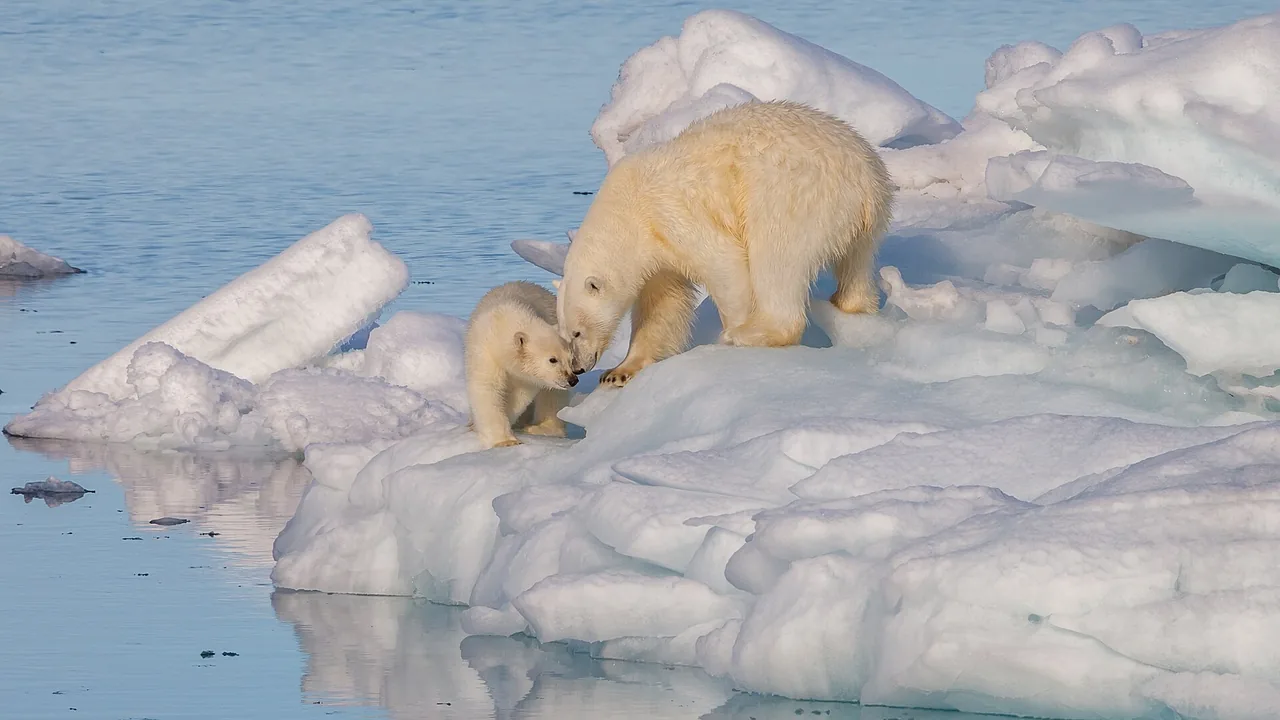
For the polar bear, the ice is its workplace. The animal is listed as vulnerable on the 2021 Norwegian Red List, and according to the Norwegian Polar Institute warming is the greatest threat. Pregnant females have to cross the ice in autumn to islands such as Hopen and Kongsøya to make a den there. Around the five most important denning areas, the number of days with sufficient ice has fallen since 1979. On Hopen, the number of dens has also dropped.
Yet the picture is not clear-cut. The population has probably grown considerably since protection in 1973, and has not declined over the past ten to fifteen years, despite much less ice, writes the Polar Institute. Adult males have even been in better condition over the last twenty years.
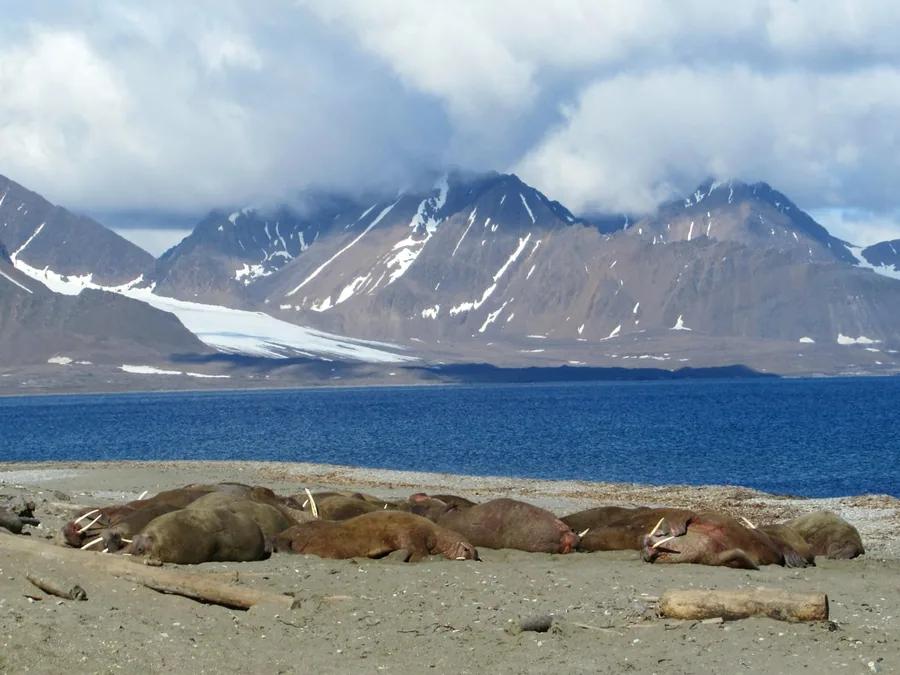
According to the Polar Institute, the walrus is less vulnerable to changes in sea ice than other species. After centuries of hunting, only about a hundred animals were left when it was protected in 1952. At the 2018 count, the Polar Institute estimated the number in the Svalbard area at 5,503.
In the fjords, it is about the ringed seal. If a fjord only freezes late in the winter, according to the Polar Institute there is not enough snow to make a den, and ringed seals sometimes have to give birth to their pups on the bare ice, where polar bears, foxes and gulls quickly find them.
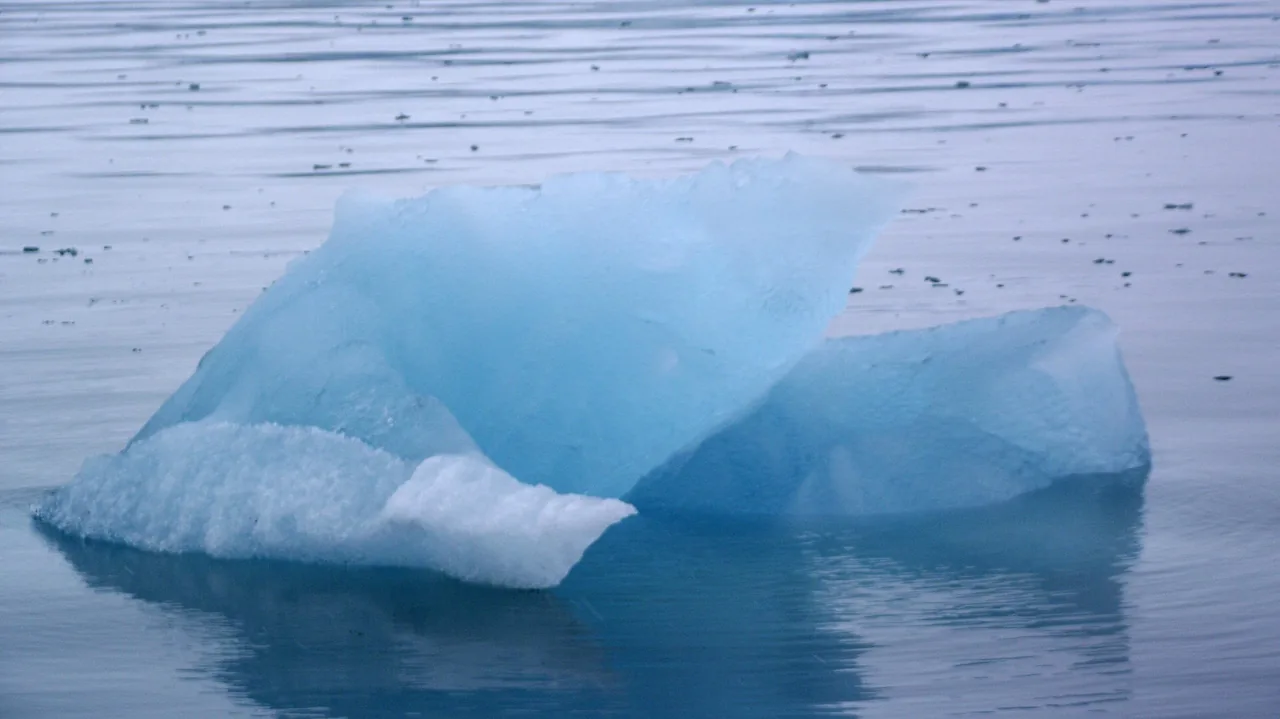
A blue chunk of glacier ice floats in calm, grey-blue water off Spitsbergen. · Smiley.toerist, CC BY-SA 4.0