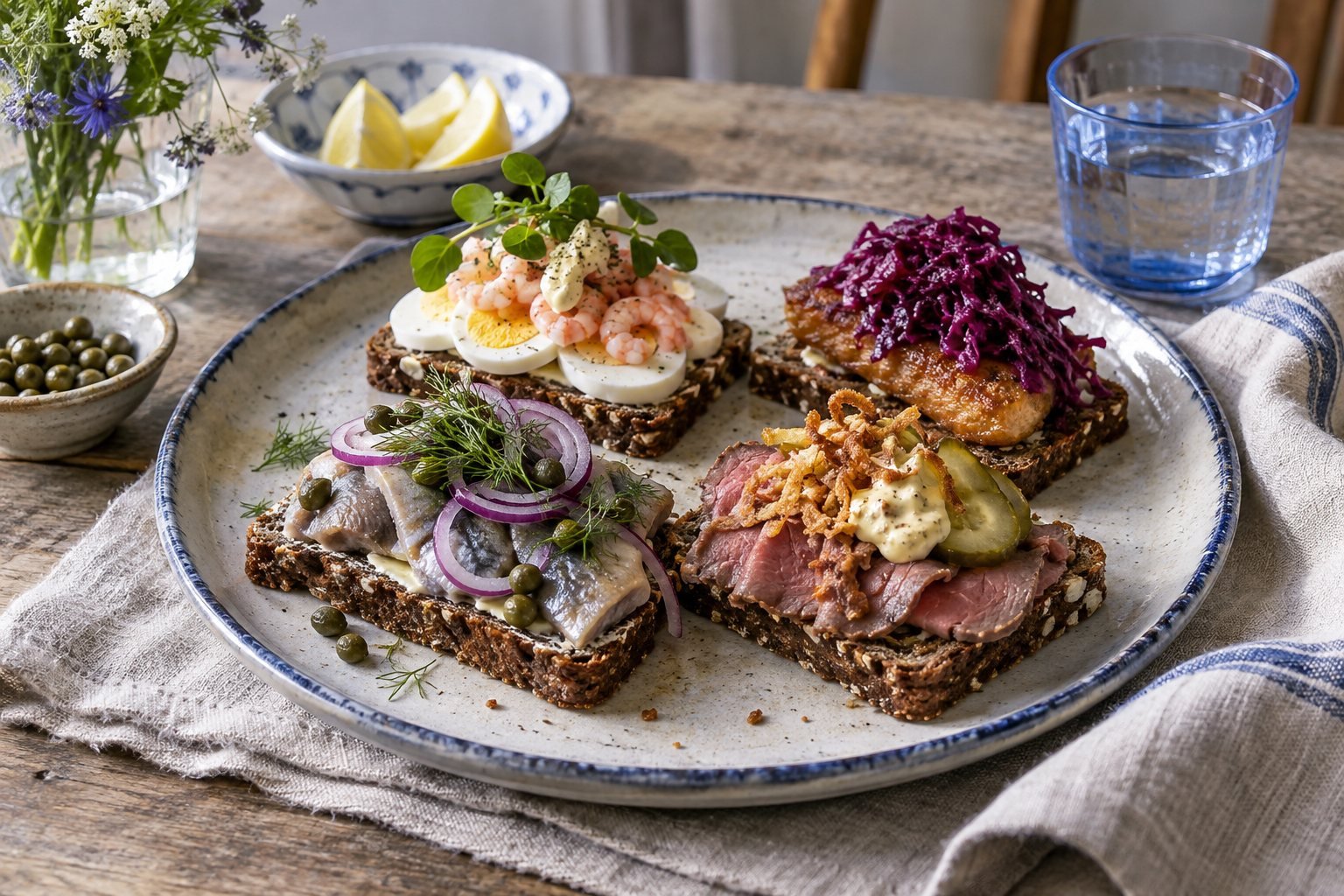
Smorrebrod: an open sandwich with an order
It is an open sandwich, and that is about the only simple thing about it. There are rules for what goes on, the order in which you eat, and why there is no lid.
Danish smørrebrød looks like something there is little to think about: bread, butter, topping. That impression collapses as soon as you sit at a Danish table.
Why there is no top slice
The difference from an ordinary sandwich is not that something is missing. It is a different design.
A closed sandwich is portable and meant to be picked up. Leave out the top slice and everything changes: the topping is visible, it can be built up in layers, and it can no longer be eaten by hand.
That is why smørrebrød is usually eaten with a knife and fork. That is not formality but consequence. With cutlery you can eat something too tall, too wet or too loose to hold, and so the topping can become more elaborate than on a roll.
What the butter is for
The butter on the rye bread is not a flavouring but a layer.
Rye bread is dense and soaks up moisture. A wet topping, from pickled herring to sauce, would make the bread soggy within minutes. A thick layer of butter seals the surface.
That explains why Danes use so much of it, and why a smørrebrød with a thin film of low-fat spread does not work. The butter is doing structural work.
The build
A good slice has one main ingredient and around it a few things in conversation with it: something sour, something fresh, something crunchy.
Often a thick sauce goes over it, such as remoulade, or italiensk salat: a salad of asparagus and diced carrot which, despite its name, is a Danish classic.
Those sauces go on in lines or dots, not as a blanket. A smørrebrød should show what lies on it; that is the whole idea of the open form.
How it comes to the table
It is customary to pass the dish of sliced bread round the table, and then each dish of toppings, from which everyone helps themselves.
That means you make your own sandwich at the table, and so there are choices to be made. At more festive meals the whole is loosely divided into courses.
That order is the rule most often cited: first the fish, then the meat, then the cheese. The idea behind it is a progression of flavour, from light and salty to heavy and full.
Why that is not pretension
To outsiders this sounds like a lot of fuss around a sandwich. But it is about something practical: a meal with ten or fifteen different things on the table needs an order, otherwise everyone eats at random and nobody tastes anything.
What looks like etiquette is in fact a method for turning a table full of separate parts into a meal. And the pleasing thing is that the rules sound strict but are applied loosely: the bread goes round, you take what you like, and the order is a recommendation, not a law.
Make it yourself
Ingredients
- 8 slices of dark rye bread
- butter, at room temperature
- for the herring version: pickled herring, red onion in thin rings, dill, capers
- for the egg version: sliced hard-boiled eggs, prawns, remoulade, watercress
- for the roast beef version: thinly sliced roast beef, crispy fried onions, gherkin, remoulade
- for the warm version: frikadeller or fried fish, red cabbage
Method
- Spread each slice of rye bread generously with butter. This is not a matter of taste but technique: the butter keeps the moisture of the topping out so the bread does not go soggy.
- Top each slice with one main ingredient and let that be the starting point. A smorrebrod has a subject; it is not a pile of everything there is.
- Then add the accompaniments: something sour, something fresh, something crunchy. Gherkin, onion, herbs, capers.
- Sauces such as remoulade go on last, in lines or dots, not as a blanket.
- Serve in order: fish first, then meat, then cheese. Put the bread in the middle and then pass round each dish of toppings so everyone helps themselves.
- Eat with knife and fork. A smorrebrod is not meant to be picked up.
Allergens: gluten, fish, egg, milk, mustard. Gluten from the rye bread, fish from the herring, egg and mustard from the remoulade, milk from the butter. Prawns add crustaceans; also check the remoulade for celery and soy.
Storage: Eat straight away. Keep toppings and bread separate if you prepare ahead; topped rye bread goes soggy within an hour.