Alba and the white truffle: the season opens with the Palio degli Asini donkey race
Euromagazine · 3 October 2026
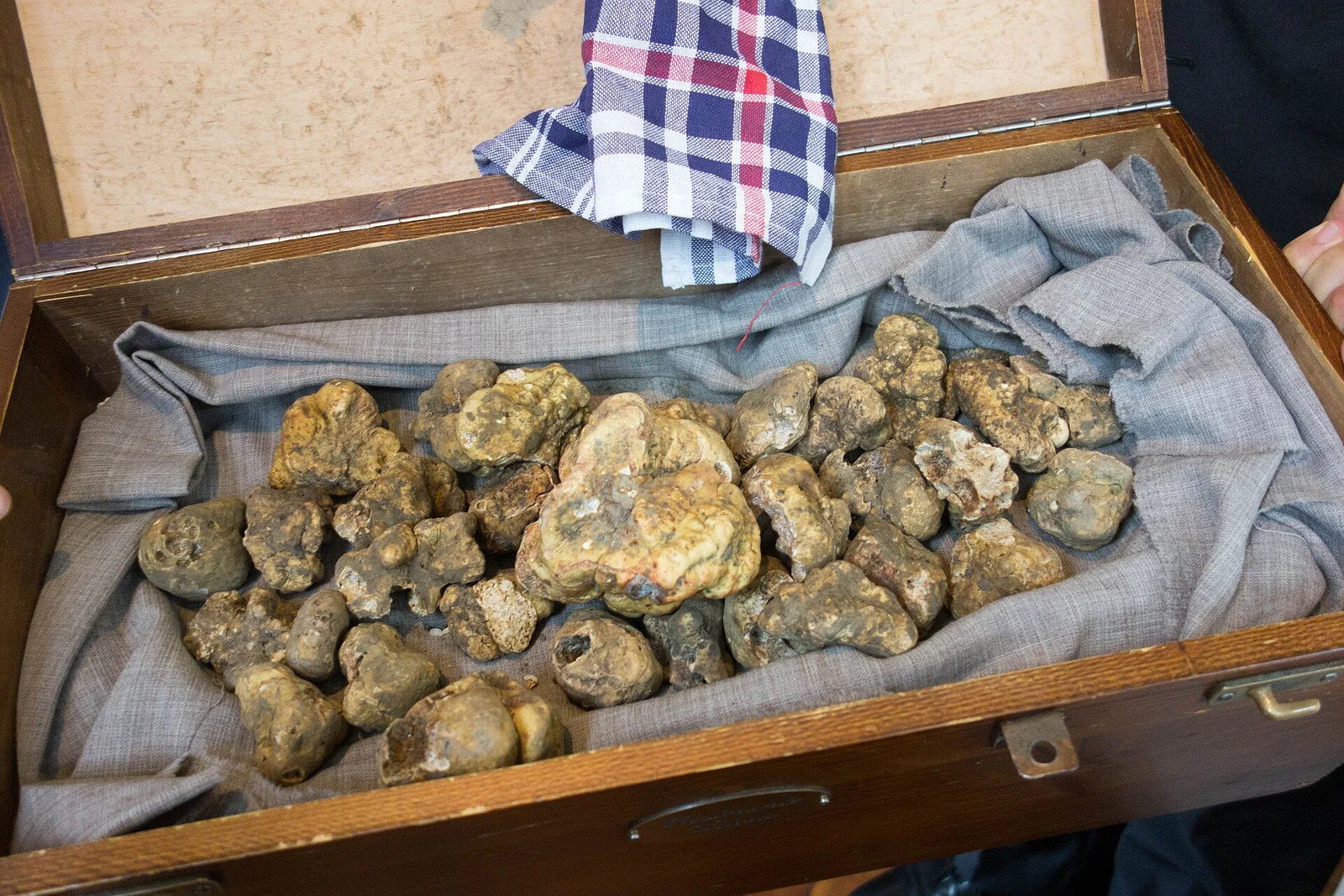
Italy · Reizen
In Alba, truffle season officially began on 1 October 2026, and on Sunday 4 October the nine districts race for a banner, on donkeys. How a joke from 1932 became a fixture of the truffle fair.
During the night of Wednesday 30 September to Thursday 1 October 2026, the truffle season opened in Alba, in the northern Italian region of Piedmont. According to the organisers of the truffle fair, this is how it goes every year: at midnight the town celebrates the start of the hunt for the white truffle. On Sunday 4 October comes another ritual that belongs just as much to autumn, but with far less reverence: the Palio degli Asini, a race on donkeys, the fair’s organisers report.
According to the fair’s organisers, the international truffle fair itself only begins on Saturday 10 October and runs until 6 December 2026. It is the ninety-sixth edition. So first there is an afternoon full of banners, costumes and stubborn animals.
A town that welcomes the truffle at midnight
According to the fair’s organisers, the Capodanno del Tartufo, the truffle new year, falls this year during the night between 30 September and 1 October. That is when Alba celebrates the official start of the hunt for the white truffle (Tuber magnatum Pico). A procession of truffle hunters (trifolao) and their dogs (tabui) makes its way across the squares of the old town. It all ends with a shared toast to the new season, with a glass of Alta Langa DOCG.
The local news site Lavocedialba reported that almost two hundred dogs took part in the procession that opened the season.
The donkey race: a joke that stuck
According to the fair’s organisers, the Palio degli Asini will be held on Sunday 4 October 2026. Nine borghi, districts of the town, compete for the drappo, the banner. In the morning the donkeys are assigned to the districts on Piazza Risorgimento; in the afternoon two heats and a final follow on Piazza Senatore Osvaldo Cagnasso. The organisers stress that the event is organised with respect for the animals. This year’s banner bears the signature of the Alba sculptor Riccardo Cordero.
Before the race, a medieval procession makes its way through the town. According to Lavocedialba, more than 1,200 costumed participants take part; the organisers speak of more than a thousand.
The origin is partly history, partly legend, writes the regional website langhe.net. In 1275, Alba and Asti, arch-rivals, were at war. On 10 August that year, troops from Asti plundered the monastery of San Frontiniano south of Alba. As a sign of their superiority, the people of Asti ran a palio along Alba’s town walls. Legend has it that Alba’s new podestà, to mock the enemy, then had a palio run with donkeys.
The first actual donkey race was in 1932, writes langhe.net. That year, the people of Asti refused Alba’s riders a place in their palio. Pinot Gallizio, a versatile artist from Alba, then organised the donkey race to mock the rival. The Centro Studi Beppe Fenoglio notes that the race began in 1932 and was then repeated in 1933 and 1934, again after the war in 1945, 1947 and 1948, and in 1951 and 1952 as the Giostra delle Cento Torri.
How the donkey race returned in 1967
The breakthrough came in 1967, according to the Centro Studi Fenoglio "the consecration" of the race. Since then it has been held without interruption, except in 1976. According to langhe.net, this was linked to the fair itself: in the 1960s, the truffle fair was struggling with its organising costs and was in danger of disappearing. One of the new initiatives was reviving the donkey race, at the instigation of, among others, Paolo Farinetti, father of Oscar Farinetti, the founder of Eataly. In 1967 the palio thus got a more modern look and became above all a show of the town itself.
During the fair, more than 600,000 visitors on average choose the hills of the Langhe, Monferrato and Roero, the organisers report. According to them, the white truffle itself exists thanks to the balance between people, woodland, soil and water.
A different way of looking
Alba is known for a rare, expensive truffle, and every year the town has its districts compete on donkeys. That is no coincidence: the race began as a way of mocking the rival from Asti. The joke stuck, and now forms the light-hearted start of a season in which the serious work of hunting and tasting follows.
Sources and image credits
- www.fieradeltartufo.org/eventi-fiera-del-tartufo/sfilata-e-palio-degli-asini/
- www.lavocedialba.it/2026/09/28/leggi-notizia/argomenti/eventi-17/articolo/domenica-di-festa-ad-alba-sfilano-i-1200-figuranti-e-scatta-il-palio-degli-asini-2026-1.html
- www.turismodelgusto.com/evidenza/fiera-internazionale-del-tartufo-bianco-dalba-2026/
- www.centrostudibeppefenoglio.it/it/articolo/38-791-4999/storia-locale/la-fiera-del-tartufo-bianco-dalba/palio-degli-asini-giostra-delle-cento-torri
- langhe.net/evento/alba-palio-degli-asini/
Image credits 1
Photo: Kent Wang from London, United Kingdom / Wikimedia Commons, CC BY-SA 2.0

Image credits 2
Photo: Phyrexian / Wikimedia Commons, CC BY-SA 4.0

Image rights