Erntedankfest: why Germany celebrates the harvest today
Redactie Euro Magazine · 4 October 2026
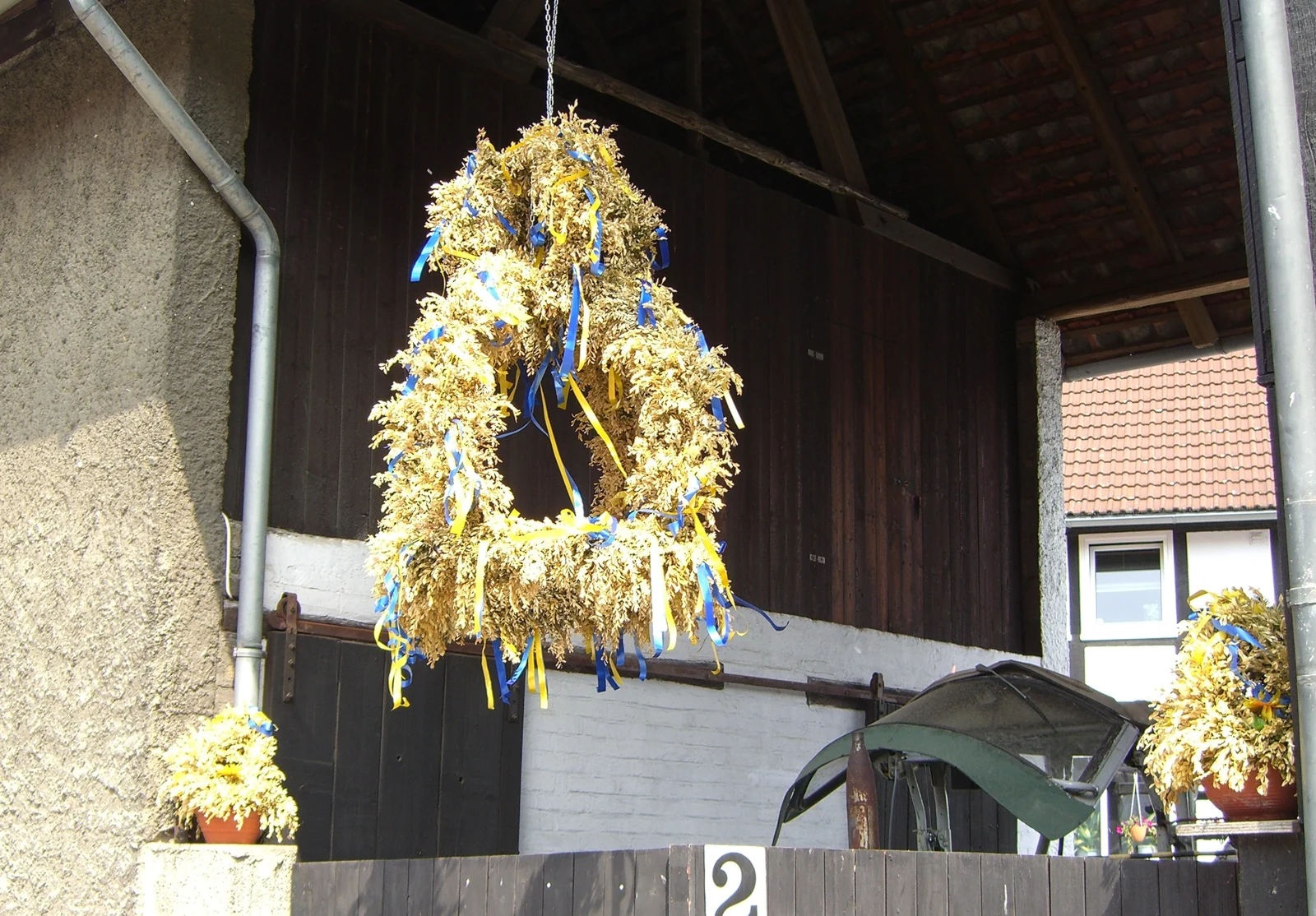
Walk into a church in Germany today and there is a good chance you will find an altar full of fruit, vegetables and bread. It is Erntedankfest, the harvest thanksgiving festival. With the festival, Christians recall the close bond between people and nature, writes the Evangelical Church in Germany (EKD). Thanking God for the harvest has, according to the EKD, always been one of the basic religious needs.
Why the first Sunday of October
The German Catholic Bishops' Conference chose the first Sunday of October as a suitable moment in 1972, explains the Protestant Q&A site evangelisch.de. In 2006 the EKD decided in effect the same, with this rule: Erntedank is celebrated on the first Sunday after Michaelmas (29 September), unless Michaelmas itself falls on a Sunday. In practice, in Germany that comes down to the first Sunday of October, which this year means today.

A crown of grain
Traditionally, at the end of the harvest, congregations decorate their altars with produce from the fields, according to the EKD. The harvest crown in particular, the Erntedankkrone, has become a fixture in many churches, according to the Archdiocese of Cologne. Such a crown is bound from braided ears of grain and decorated with produce from the fields. Members of the congregation bring harvest gifts to the altar, including fruit and vegetables.
The festival is older than Christianity. In the Roman Empire, ancient Greece and Israel, people already had rituals to give thanks for the harvest, writes the archdiocese. Christians adopted that custom. Traditions vary widely from region to region: according to the archdiocese, some congregations also celebrate with dancing, festive meals and processions.
Sources and image credits
- https://www.ekd.de/christinnen-und-christen-feiern-erntedankfest-75312.htm
- https://fragen.evangelisch.de/frage/3624/wer-legt-fest-wann-erntedank-ist
- https://www.erzbistum-koeln.de/presse_und_medien/magazin/Erntedank-Geschichte-und-Bedeutung-des-Erntedankfests/
Image credits 1
Photo: Times / Wikimedia Commons, CC BY-SA 3.0

Image credits 2
Photo: Dr. Meierhofer / Wikimedia Commons, CC BY-SA 3.0

Image rights