Monet's Iris at Sotheby's in Paris: the hidden canvas and where to see his irises
On 22 October 2026 Sotheby's in Paris will auction Iris, a late canvas that Claude Monet painted at Giverny and that stayed out of sight for decades. What kind of painting it is, why it remained hidden and where in France you can see Monet's irises and water lilies.
Claude Monet's painting Iris goes under the hammer at Sotheby's in Paris on Thursday 22 October 2026. The Art Newspaper and Euronews reported on it on 17 and 18 September 2026. They expect Iris to break the record for the most expensive painting ever auctioned in France. The auction house estimates it will fetch €22 million to €30 million. What the canvas actually sells for will only become clear on the evening of the sale.
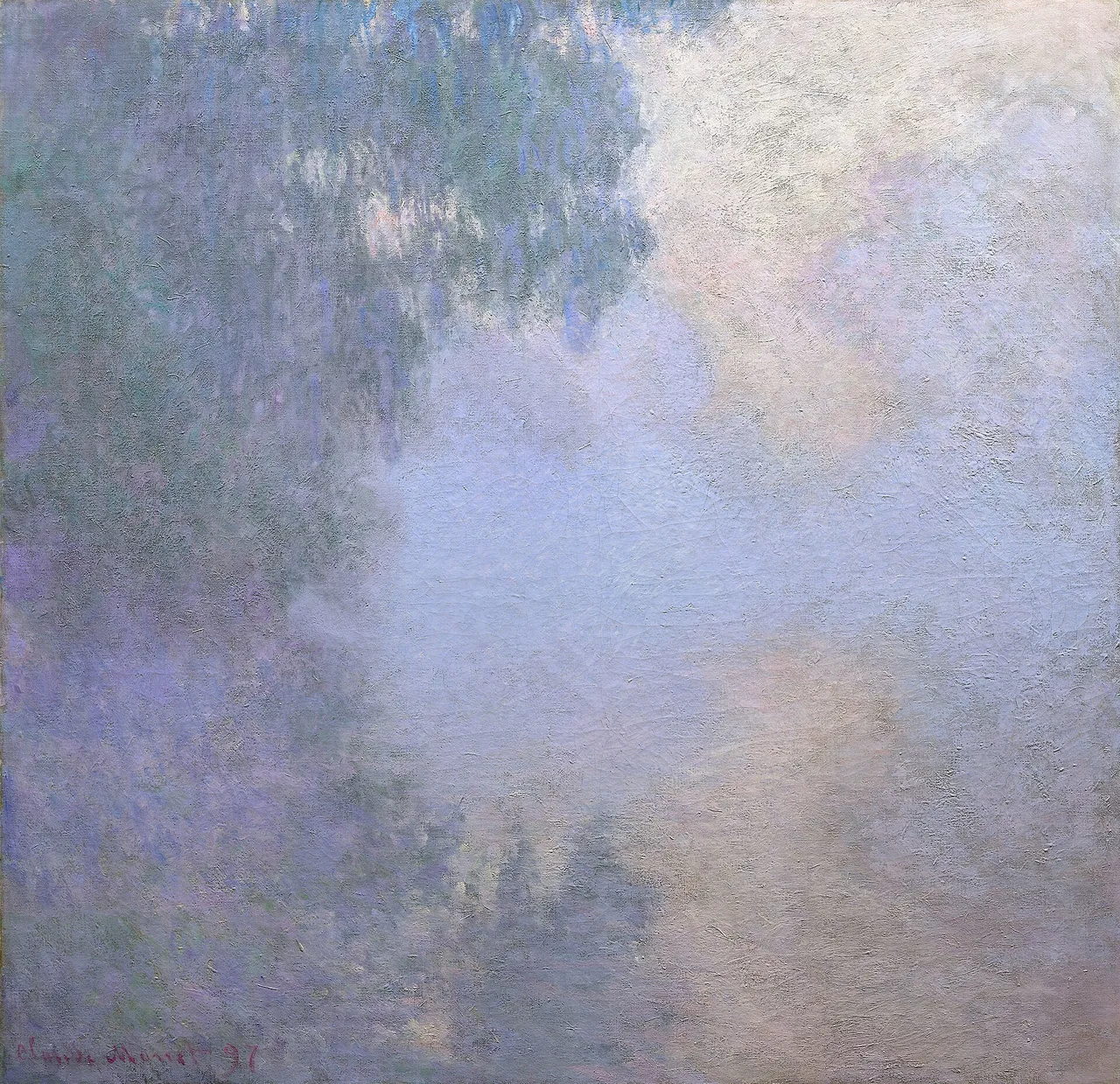
Iris is a large late work measuring 160 by 180 centimetres. Monet painted it around 1924–25 at Giverny, the village in Normandy where he lived. The canvas is the highlight of a sale of 28 works from the collection of Jeanne Schlumberger (1889-1983). Sotheby's estimates the collection as a whole at more than €40 million. A second Monet from the same collection, Saule pleureur (Weeping Willow), is estimated by Sotheby's at €9 million to €12 million.
Why Iris stayed out of view for so long
Until Sotheby's showed it in Paris in mid-September, Iris had never been on public display. From the moment Jeanne Schlumberger bought it, it remained with her family. The rest of the collection also stayed out of sight for decades. Many of the works have never been seen outside the family, because Jeanne Schlumberger rarely lent her collection to museums, The Art Newspaper writes.
After Monet's death the painting passed to his son, Michel Monet. It then reached Jeanne Schlumberger through the Paris gallerist Katia Granoff, according to the provenance Sotheby's gives for the work. Granoff bought Michel Monet's studio holdings, which included many works from his father's final years. Schlumberger helped to pay for that purchase.
Those late Monets were out of favour at the time. When Monet died they were met with incomprehension: some critics saw in them the work of a blind or senile painter, Thomas Bompard, a specialist at Sotheby's, which is holding the sale, told The Art Newspaper. "She knew when she bought those two extraordinary paintings that these kinds of Monets were not at all fashionable," he said of Schlumberger.
Some art historians now see the late canvases as a bridge to abstract art.
From the garden at Giverny to the rooms of the Orangerie
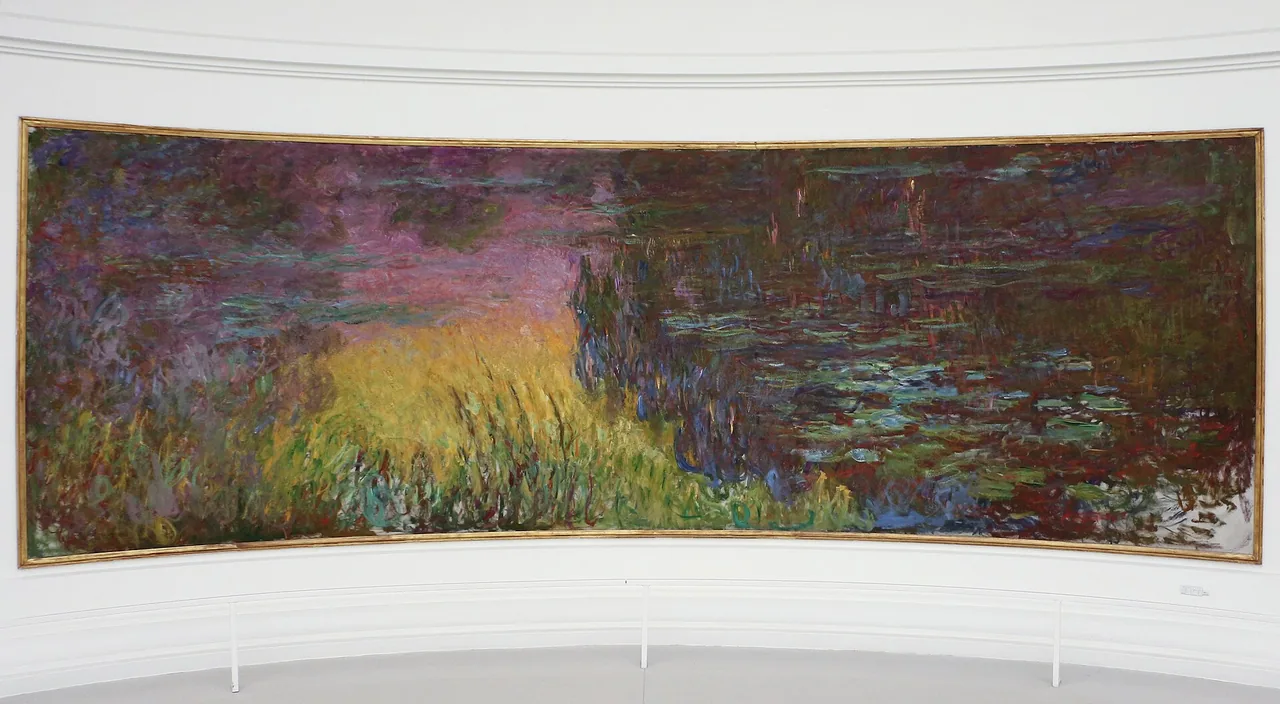
Monet lived at Giverny from 1883 until his death in 1926. He created two gardens there, according to the organisation that runs his house and gardens. Beside the house lay the Clos Normand, a garden of one hectare. Monet filled it with flowers such as tulips, daffodils, peonies and irises. Some beds were given a single colour, as if he were setting out paint on his palette.
Irises were one of Monet's favourite flowers, the organisation writes. He planted them and painted them often.
According to the organisation, in 1893 Monet bought land on the other side of the railway line. He diverted a branch of the River Epte, had a Japanese bridge built and planted water lilies in the new pond. From 1897 onwards he painted the water lilies in that pond. The Nymphéas (Water Lilies) series comprises more than two hundred canvases and occupied him until his death, according to the Musée de l'Orangerie.
During those years his eyesight deteriorated. Monet had cataracts and underwent surgery in January 1923.
The day after the Armistice of 11 November 1918, he offered France his large water-lily panels as a token of peace. In 1927, a few months after his death, they were installed in the Musée de l'Orangerie in Paris.
Where to see Monet's irises and water lilies in France
Giverny. Monet's house and gardens are open to visitors. The irises are at their finest in the second half of May, the organisation says. They then line half of the Clos Normand. Monet's 1900 painting of his garden with irises, The Artist's Garden at Giverny, hangs in the Musée d'Orsay in Paris, according to the organisation.
Musée de l'Orangerie, Paris. Here the eight large water-lily compositions hang in two oval rooms, just as Monet himself conceived them. The rooms are lit by daylight through a glass roof, the museum says. Together the paintings cover almost a hundred metres of wall. A hundred years after Monet's death, the museum is also showing the exhibition Monet, peindre le temps (Monet, Painting Time) from 30 September 2026 to 25 January 2027, with almost forty of his paintings.
Musée Marmottan Monet, Paris. This is where Impression, soleil levant from 1872 hangs, the painting that gave the Impressionists their name. In 1966 the museum inherited more than a hundred canvases through Michel Monet, the Marmottan itself says. They include large water lilies and garden views from Giverny that Monet never showed during his lifetime.
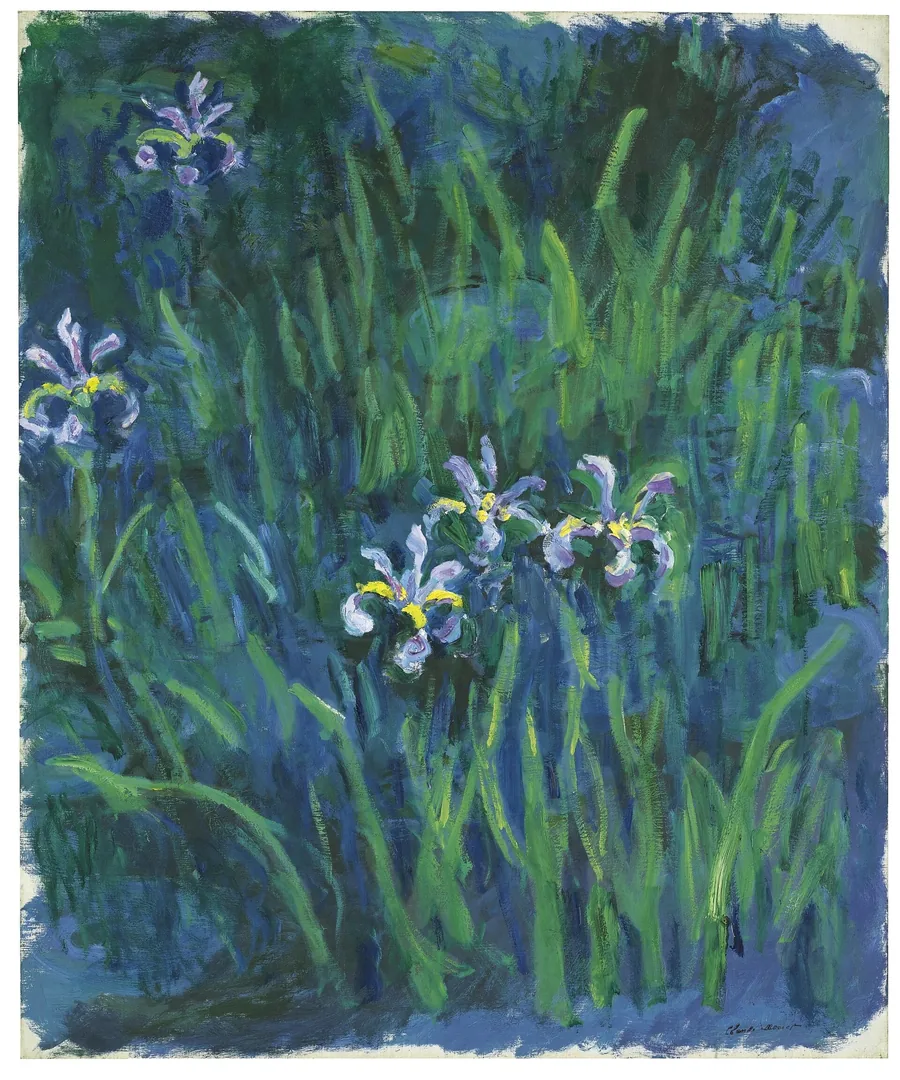
Another work by Monet, not the painting being auctioned: Branch of the Seine near Giverny (Mist), 1897, from his Mornings on the Seine series. Trees hang over the water on the left; the rest of the canvas is light, lilac-blue mist. · Claude Monet, CC BY-SA 4.0