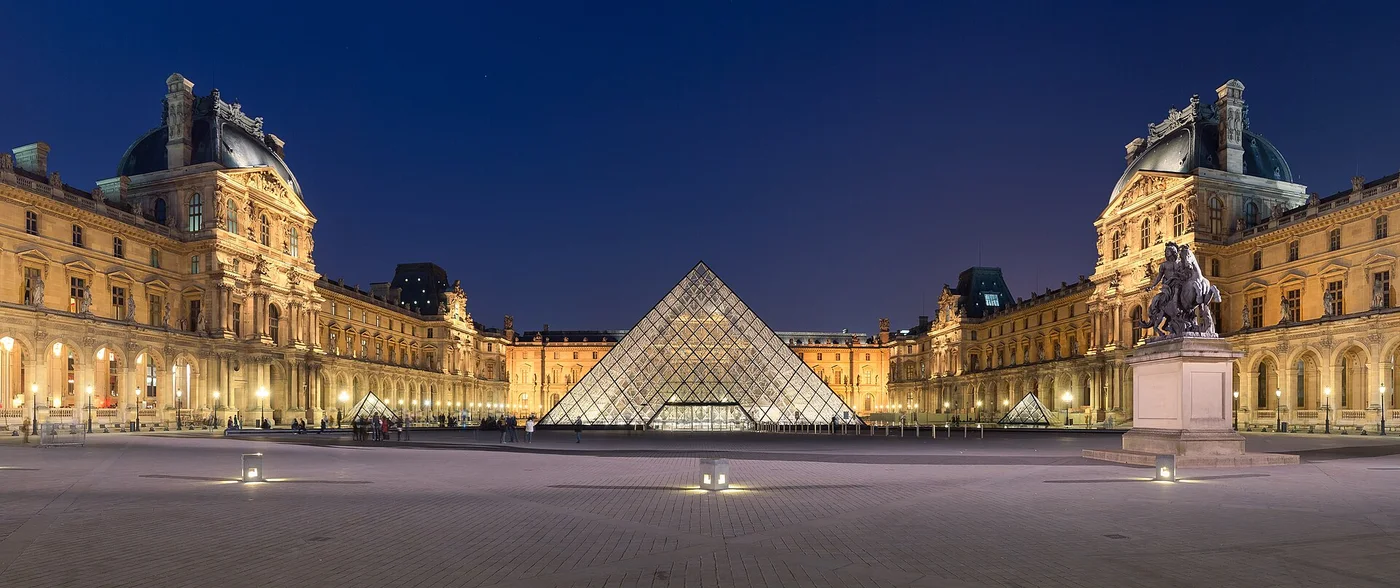
The Louvre: a fortress that became the world's largest museum by accident
In the basement a medieval castle wall still stands. Above it hangs a collection of which you can see only around six percent.
The building was never meant to hold art. The Louvre began in 1190, under Philip II, as a fortress on the edge of Paris.
That past has not been polished away. In the museum's basement the remains of the medieval castle still stand: the round base of a keep and a stretch of moat, inside the building. You can walk beneath them before you reach the paintings.
How a fortification became redundant
A fortress works as long as it stands on the edge. Paris grew over it, and with that the structure lost its function. What remained was a large, solid building on an expensive site in the centre.
In 1364 it became a royal residence. Over the following centuries the building was rebuilt, extended and adapted to a life that had nothing to do with defence.
What 1793 meant
The museum was founded on 10 August 1793. That date is not a detail. In the middle of the Revolution, the palace of the kings was opened as a public collection.
That changed not only the owner but the whole idea of what a collection is. What had until then belonged to power and was shown to those who were invited became something you could walk into.
The figures that make the museum impossible
This is where it becomes dizzying. The museum has almost 500,000 works in its care. About 30,000 of them are on display.
That is around six percent. Anyone who visits the Louvre completely, in the sense of seeing everything that hangs and stands there, has not seen more than ninety percent of the collection and never will.
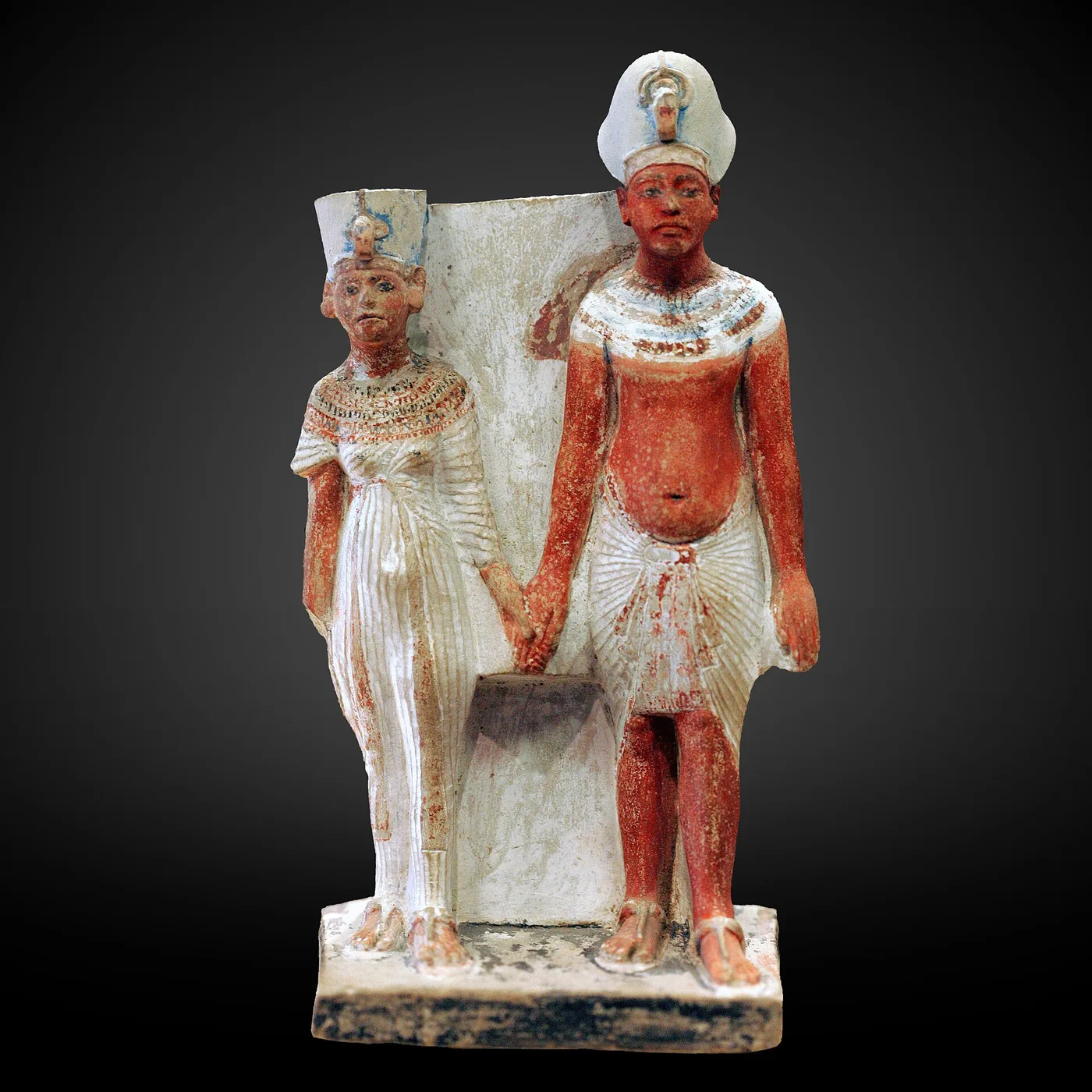
In 2025 it received nine million visitors, placing the museum first both in France and worldwide. Nine million people jostling for around six percent.
That also explains something about the experience. The complaint that the Louvre is too crowded and that at the most famous works you see only phones concerns a few rooms. The rest of the building is often strikingly quiet. The museum is not too full; a handful of paintings are.
The pyramid as a logistical answer
The glass pyramid in the Cour Napoleon is usually discussed as architecture, and that is its least interesting side.
The problem was practical. A palace that has grown over centuries has no entrance designed for millions of people; it has gates and staircases for a royal household. Visitors came in through scattered entrances and got stuck straight away.
The outdoor areas around the pyramid came into use on 15 October 1988, the underground hall on 30 March 1989. What that intervention solves is distribution: everyone enters at one point, goes underground and chooses their wing from there.
In the same year new rooms of early modern French painting opened on the second floor of the Cour Carree. The renovation was thus not a gesture but a reorganisation of the whole building.
What to make of it
The Louvre is not a museum in the sense of a collection someone assembled with an idea behind it. It is an accumulation: royal possessions, revolutionary expropriation, conquests, purchases and gifts, housed in a building put up for something else.
That it cannot be taken in on one visit is therefore not because it is badly laid out. It is the outcome of eight hundred years in which no one ever decided it was finished.