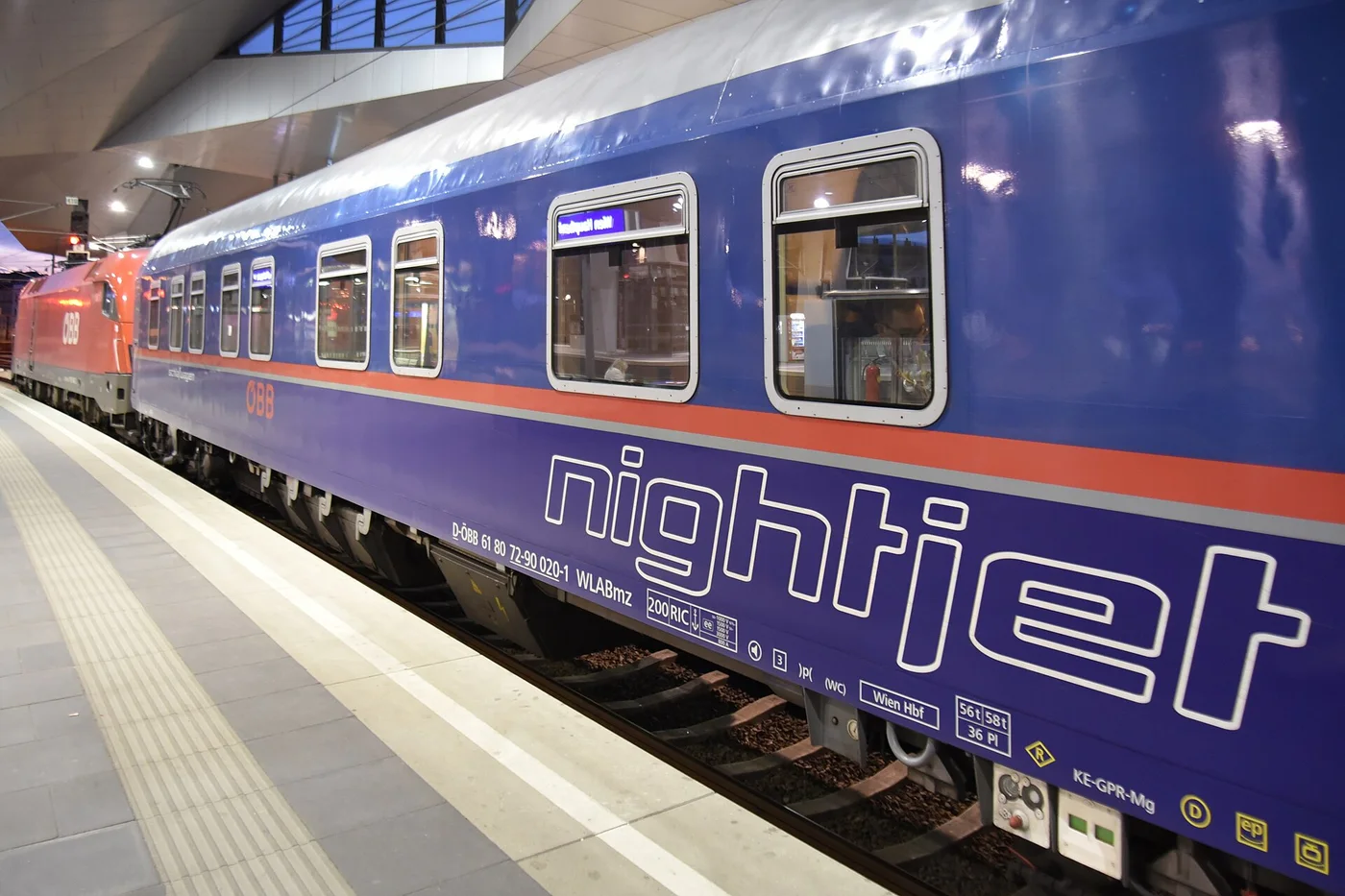
The night train: gone because flying was cheaper, back for the same reason
In 2016 an Austrian railway took over the night trains others had dropped. That choice turned out to be the start of a return.
There was a period when the night train in Europe was dying out. Connections were cut, carriages withdrawn, and the logic seemed irrefutable: who wants to be twelve hours on the way when the same route takes an hour and a half.
That reasoning held as long as you looked only at journey time and ticket price.
What happened in 2016
On 11 December 2016 the first Nightjet ran. That is the brand name the Austrian Federal Railways gave to their night trains, as successor to City Night Line.
The remarkable thing is not the name but the direction. Where other operators were winding down their night services, the Austrian one took over rolling stock and connections. At that moment it was a bet against the trend.
Partners now run under the Nightjet Partner label, in the Czech Republic, Slovakia and Slovenia among others. It is therefore no longer a national service but a network.
What you can book
The trains offer three levels, and that difference is greater than outsiders assume.
There are sleeping cars with real beds, couchette cars with simpler berths in a shared compartment, and ordinary seated carriages. That makes the same train both a hotel room and a cheap crossing, depending on what you book.
On certain connections within Austria and on the seasonal service to Croatia, cars can also be carried. That is a remnant of an older idea, the motorail train, long considered obsolete.
Why the sum has changed
The night train disappeared when flying became cheap. It is coming back now that the costs of flying are counted differently.
There is a practical argument on top of that, unrelated to climate. A night train does not save journey time, it trades it. The hours you spend in it are hours you would have slept anyway, and you arrive in the centre of a city rather than at an airport outside it.
Add the time flying costs outside the flight itself, the trip to the airport, checking in, waiting, and the difference becomes smaller than the timetable suggests.
Why it stays difficult
To be fair: a night train is expensive to run. A sleeping car carries far fewer people per coach than a seated one, the stock stands idle by day, and the staff work at night.
On top of that, a train crossing several countries deals with as many infrastructure managers, signalling systems and rulebooks. That an Austrian operator took this on with partners in neighbouring countries is therefore not only commercial but organisationally the heart of the story.
What the return of the night train shows is that a mode of transport does not disappear because it is bad, but because the conditions under which it is judged change. And that those conditions can just as easily change back.